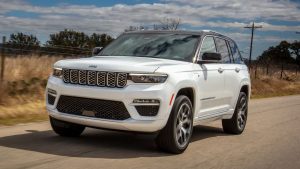
Modern off-roaders are impressive in the way a smartphone is impressive: packed with features, constantly thinking, occasionally freezing at the worst possible time. They have traction modes for sand, mud, snow, gravel, and (presumably) “mild panic.” They beep, they bong, they negotiate with the terrain like a lawyer at a settlement conference.
Then there’s the 1978 Toyota Land Cruiser—most commonly the FJ40 in the U.S.—which approaches off-roading with the confidence of a cast-iron skillet. No apps. No screens. No drama. It doesn’t “select” a terrain mode. It is a terrain mode.
We took a 1978 Land Cruiser off-road expecting charming old-car chaos. What we got instead was something almost insulting: it climbed, crawled, and trudged along with such calm competence that it felt like the trail was an inconvenience to the trail, not the vehicle.
What Makes a 1978 Land Cruiser So Unbothered?
A 1978 Land Cruiser is the kind of machine that looks like it was designed by people who didn’t trust roads to keep existing. Underneath, it’s simple, tough, and built around the idea that “breaking” is optional.
In the U.S., a typical ’78 FJ40 came with Toyota’s 4.2-liter 2F inline-six, paired with a four-speed manual transmission and a two-speed transfer case for low range. Power figures vary by source and market, but the common factory rating you’ll see is about 135 horsepower and roughly 200–210 lb-ft of torque—more tractor than track star. (conceptcarz.com)
That doesn’t sound like much until you remember the goal isn’t to win a drag race. The goal is to move, slowly and relentlessly, when the ground is trying to become an argument.
The Secret Sauce Is Old-School Hardware
This Land Cruiser doesn’t rely on software to fake capability. It’s got the classic off-road recipe: a sturdy ladder frame, solid axles, and leaf springs front and rear. It’s not fancy. It is, however, extremely hard to confuse. (conceptcarz.com)
The short wheelbase—around 90 inches on the FJ40—helps it pivot through tight sections and break over obstacles without dragging its belly like a beached manatee. (conceptcarz.com)
And by 1978, U.S.-spec FJ40s had front disc brakes (with rear drums), which matters more off-road than people think. Controlling your descent is as important as climbing, and old drum brakes don’t always love repeated downhill work. (Hemmings)
Off-Road Impressions: Slow, Loud, and Weirdly Brilliant
You don’t “hustle” a 1978 Land Cruiser. You operate it. The steering feels honest in the way a handwritten note feels honest: a little rough, but you believe every word. The engine note isn’t a performance soundtrack—it’s a working noise, like a generator at a campsite.
Low Range: The Moment It Stops Being a Classic and Starts Being a Tool
The first time you drop it into low range, you immediately understand why this thing has a cult following. The Land Cruiser doesn’t surge forward. It doesn’t spin up. It simply moves with the steady patience of something that assumes it will get there eventually—because it always has.
That steady crawl is where the 2F engine’s character makes sense. It’s not about horsepower. It’s about usable grunt and predictable response. Several period and enthusiast references highlight the 4.2L six as the standard powerplant in this era, commonly paired with a four-speed manual and low range. (conceptcarz.com)
Traction Without Tricks
Modern trucks often feel like they’re constantly correcting you. The Land Cruiser feels like it’s waiting for you to stop overthinking.
With part-time 4WD and manually locking front hubs common on these rigs, traction is less “automatic” and more “decisive.” You engage the system, and it stays engaged. There’s no mystery about what the vehicle is doing. It’s all mechanical, which means it’s predictable—and predictability is a superpower on uneven terrain. (Hemmings)
The Part No One Warns You About: It’s Not Trying to Impress You
This is where the Land Cruiser messes with your head. Plenty of vehicles can do one heroic obstacle for the camera. The 1978 FJ40 just… keeps going. It doesn’t feel like it’s at the edge of its ability. It feels like it was built for this, and everything else is the compromise.
That may be why the 40 Series became such a global legend. Toyota produced the J40 series for decades, and it earned its reputation in places where “reliability” isn’t a buzzword—it’s survival. (Wikipedia)
Where It Feels Strongest
On loose dirt, rutted climbs, and rocky sections where you need slow control, the ’78 shines. The short wheelbase helps it crest without scraping, and the whole truck feels compact in a way modern off-roaders rarely do. It fits between trees, it tucks into lines, and it doesn’t feel like you brought a full-size living room into the woods.
Where It Feels… 1978
Let’s be honest: comfort is not the point.
The cabin is loud, the ride is busy, and you don’t so much “glide” over bumps as you “experience” them. Leaf springs are tough and simple, but they don’t do plush. Also, anything above moderate speed can feel like you’re piloting a toolbox through a windstorm.
And yet, off-road, that simplicity is calming. There’s less to distract you and less to fail. The truck is basically telling you: “Drive. Choose a line. We’ll handle the rest.”
Should You Actually Take a 1978 Land Cruiser Off-Road Today?
Yes—with a few practical caveats.
A 1978 Land Cruiser is old enough that condition matters more than the badge. Some are beautifully restored. Some are held together by optimism and a previous owner’s “custom wiring.”
If you plan to wheel one, prioritize fundamentals. Brakes matter (and you’re in luck: front discs were present on U.S. models by this era). Steering components, suspension bushings, wheel bearings, and cooling system health are all more important than shiny accessories. (Hemmings)
Also, be realistic about power. Depending on the source and configuration, the 2F is commonly cited around 125–135 hp with torque around 200 lb-ft in this period. That’s plenty for crawling, but it won’t feel quick. (Hemmings)
Why It “Never Noticed” the Trail
The best way to explain the 1978 Land Cruiser is this: it doesn’t feel like it’s conquering nature. It feels like it was built to work with it.
Modern off-roaders can be astonishing, but they often feel like they’re doing complicated math to survive. The Land Cruiser feels like it already knows the answer.
And that’s the weird magic of driving one off-road today. You expect a vintage vehicle to be fragile and dramatic. Instead, the old Toyota behaves like a calm, stubborn professional—clocking in, doing the job, and refusing to make a big deal out of it.
References
1978 Toyota Land Cruiser FJ40 specifications (2F 4.2L inline-six, ~135 hp, 4-speed manual, wheelbase ~90 in, front disc brakes). (conceptcarz.com)
Hemmings 1978 Land Cruiser brochure summary (4.2L inline-six, 4-speed manual, 2-speed transfer case, disc/drum brakes, skid plates). (Hemmings)