The car industry has spent years trying to make electric vehicles faster, cleaner, and more efficient. Now Kia is asking a more interesting question: what if the next great EV did not just drive like the future, but felt like a video game brought to life?
The Kia Vision Meta Turismo matters because it captures a major cultural shift in mobility. A new generation did not fall in love with performance cars through posters, engine noise, or weekend wrenching. Many first experienced speed through racing games, digital cockpits, simulation rigs, and virtual supercars. Kia’s concept treats that background not as a gimmick, but as the foundation for a new kind of grand tourer.
A Concept Built For The Gaming Generation
The Vision Meta Turismo is not simply a strange-looking concept car with a few digital effects added for attention. It is a deliberate attempt to redesign the emotional experience of driving around people who grew up with consoles, online racing, virtual garages, and highly stylized digital worlds.
That makes it different from the usual futuristic show car. Many concepts focus on autonomy, minimalism, or environmental responsibility. This one focuses on desire. It wants the EV to feel theatrical again. It recognizes that electric performance is already brutally quick, but often emotionally muted. Without gear changes, engine vibration, or mechanical drama, the challenge becomes less about speed and more about sensation.
Kia’s answer is to combine physical controls, augmented reality, immersive displays, and gaming-inspired interaction. The big idea is not that cars should become toys; it is that future performance cars may need to compete with digital experiences as much as rival vehicles.
Exterior Design With A Digital-Supercar Attitude
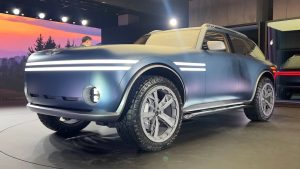
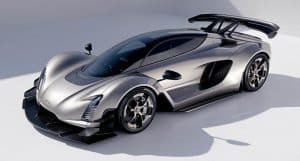
From the outside, the Vision Meta Turismo looks like a PlayStation fantasy made real. It has the low, wide proportions of a grand tourer, but the surfacing is sharper and more experimental than a conventional sports sedan. The profile suggests motion even when the car is standing still, while the glass-heavy upper section gives it the feeling of a cockpit rather than a cabin.
The design language leans into contrast. It is sleek but angular, technical but emotional, futuristic but still recognizably automotive. The long body and dramatic stance suggest high-speed touring, yet the visual details feel closer to a racing simulator than an old-school performance saloon.
That balance is important. Kia is not trying to revive the past exactly as it was. Instead, the concept imagines what a spiritual successor to the classic performance sedan might look like in a world where digital immersion has become part of everyday life.

Three Modes Define The Experience
The most important part of the Vision Meta Turismo is not the bodywork. It is the way the car changes character through three distinct user modes. Each one reframes the cabin around a different kind of experience.
| Mode | Main Purpose | What It Changes |
|---|---|---|
| Speedster | Focused performance driving | AR driving visuals, virtual gearshift feel, heightened speed sensation |
| Dreamer | Relaxed digital immersion | Augmented reality layers, passenger interaction, infotainment exploration |
| Gamer | Parked simulation experience | Racing-simulator setup, steering interface, social gaming environment |
Speedster mode is the most driver-focused. It uses augmented reality and sensory feedback to make acceleration and motion feel more dramatic. Dreamer mode softens the experience, turning the cabin into a more contemplative digital space. Gamer mode is the most radical because it effectively transforms the parked car into a racing simulator.
That last feature is the clearest signal of Kia’s intent. The Vision Meta Turismo does not treat driving and gaming as separate worlds. It blends them into one lifestyle environment.
The Joystick Shifter Is More Than A Gimmick
One of the concept’s most talked-about features is its joystick-like control interface. At first glance, it looks like a playful novelty, the kind of show-car flourish that never reaches production. But it represents a deeper design argument.
Modern EVs have removed many of the tactile rituals that once defined performance driving. There is no manual gearbox to master, no clutch bite point, no rising mechanical soundtrack, no sequence of shifts that gives acceleration its rhythm. For many drivers, that loss matters.
The Vision Meta Turismo responds by reintroducing touch. The joystick-style control, specialized steering interface, launch-style functions, and simulated gearshift sensations all point toward a future where EVs create new forms of feedback rather than pretending combustion-era mechanics still exist unchanged.
This is where the concept becomes genuinely interesting. Kia is not just adding screens. It is asking how a digital car can still feel physical.
A Cabin That Switches From Cockpit To Lounge
Inside, the Vision Meta Turismo splits the experience between two worlds. The driver’s side is focused, technical, and cockpit-like. The passenger environment is calmer, softer, and more lounge-oriented. That contrast gives the car much of its personality.
The rotating passenger seat is especially revealing. When the vehicle is stationary, the cabin can shift away from the traditional forward-facing layout and become a social or entertainment space. This matters because EV architecture gives designers more freedom to rethink interior use. Without the same packaging limitations as combustion vehicles, the cabin can become more flexible.
The result is a car that does not define itself only by motion. It also matters when parked. That may sound odd for a grand tourer, but it reflects how people increasingly use vehicles as private rooms, digital hubs, workspaces, and entertainment zones.
AR And Eye Tracking Push The Interface Forward
The Vision Meta Turismo also experiments with augmented reality and eye-tracking displays. In practical terms, that means information can be layered into the driver’s field of view rather than confined to a dashboard screen. In emotional terms, it means the car can make the road feel more like an interactive environment.
This is where the gaming influence becomes most visible. Racing games have trained players to read speed, ranking, boost, timing, and positioning through dynamic visual overlays. Kia appears to be exploring how some of that logic could migrate into a real vehicle without overwhelming the driver.
The challenge will be restraint. Too much visual stimulation could become distracting. Used intelligently, however, AR could make future EVs feel more intuitive, more personal, and more alive.
Why This Concept Matters In 2026
The Vision Meta Turismo arrives at a moment when EV design is entering a new phase. The early race was about range, charging, and acceleration. Those still matter, but they are no longer enough to make an electric car feel distinctive. As EV platforms become more common, brands need personality.
Kia has been especially willing to use concept cars as serious previews of design direction rather than purely theatrical exercises. That does not mean the Vision Meta Turismo will reach showrooms exactly as shown. It almost certainly will not. But its ideas could influence future GT models, performance EVs, interface design, and cabin architecture.
The most likely production legacy is not one specific feature. It is the philosophy: digital immersion, tactile feedback, flexible interiors, and emotionally richer EV performance.
A Strange Car With A Serious Message
It is easy to dismiss the Vision Meta Turismo as weird. It has gaming modes, AR layers, a joystick-like shifter, a rotating lounge seat, and the visual attitude of a concept car designed for a digital universe. But that weirdness is precisely why it matters.
The automotive world is changing faster than traditional design language can comfortably explain. Younger buyers may not define performance through displacement, exhaust note, or Nürburgring mythology alone. They may care just as much about interface, immersion, personalization, and how a car fits into a digital life.
The Kia Vision Meta Turismo takes that shift seriously. It does not merely ask how fast an EV can go. It asks how an EV should feel, how it should entertain, and how it should connect with drivers whose first dream cars may have existed on a screen.
That is why this concept matters right now. The next frontier in electric cars will not be measured only in miles of range or seconds to 60 mph. It will be measured in emotion, interaction, and identity and Kia has just shown how strange, bold, and compelling that future could become.