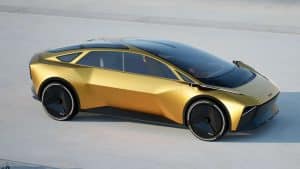
The Jeep Recon EV has moved beyond concept-car promise and into the harder phase: asking buyers to accept a battery-powered off-roader with Wrangler-adjacent attitude, a premium price and finite backcountry range. Its importance is not simply that it makes 650 horsepower. Jeep is testing whether electrification can preserve the rituals and credibility that make an off-roader more than transportation.
That makes the Recon part of a larger corporate gamble. Jeep sits at the center of the Stellantis comeback strategy, and this vehicle must prove the group can build an EV people desire for identity and use—not merely for efficiency. The Recon is a market test, not a novelty.
The Jeep Recon EV Is No Longer a Thought Experiment
The 2026 Recon is now offered in limited quantities, with the launch-focused Moab trim starting at $66,995. Jeep’s current Recon pricing and availability means buyers are no longer evaluating a show-car sketch; they are comparing a real order against Wranglers, Broncos, Rivians and well-equipped combustion SUVs.
Two electric drive modules produce 650 horsepower and 620 pound-feet of torque, while a 100.5-kWh battery sits beneath the vehicle. Zero to 60 mph can take 3.6 seconds, but that number is almost a distraction. The larger contribution is showing how a legacy off-road brand can use electric hardware for control rather than merely acceleration.
Electric Torque Solves a Real Off-Road Problem
Traditional four-wheel-drive vehicles use transmissions, transfer cases, axle gearing and driver technique to multiply torque at low speed. The Recon takes another route. Its single-speed driveline combines front and rear motors with a 15:1 rear final-drive ratio, an electronic rear locker and a dedicated Rock mode on the Moab trim.
That matters because precision matters more than spectacle on technical terrain. Immediate torque helps only when the accelerator is predictable and the vehicle can keep moving as grip changes. Jeep’s challenge was to make electric response useful at crawling speed rather than dramatic on a specification sheet.
The supporting hardware is serious: 33-inch all-terrain tires, 9.1 inches of ground clearance, steel battery protection and trail-focused drive modes. The Recon is not body-on-frame and lacks a conventional low-range transfer case. Its credibility depends on whether electric response, gearing and chassis calibration can deliver confidence through a different mechanical language.
Where the Recon Changes the Off-Road Formula
The clearest way to understand the Recon is to compare the problems it solves with the compromises it creates.
| Decision factor | Recon’s answer | Why it matters |
|---|---|---|
| Low-speed traction | Dual motors, rear e-locker and Rock mode | Power can be metered without engine revs or gear changes |
| Trail protection | Steel battery shields and off-road tires | The battery must survive impacts road EVs rarely face |
| Open-air character | Removable doors and rear glass | Jeep preserves a defining ownership ritual |
| Highway and trail range | EPA-rated 222 miles | Remote trips require more planning |
| Weight | Estimated 6,112-pound curb weight | Mass affects efficiency, tire load and recovery |
| Daily usability | Quiet running, rapid acceleration and home charging | It can commute between trail weekends |
The Recon does not simply replace gasoline with electricity. It rearranges the off-road equation, gaining precise propulsion and quiet operation while making energy planning and mass harder to ignore.
The 222-Mile Number Is the Whole Argument
The Recon Moab is officially rated at 222 miles, 71 MPGe combined and 48 kWh per 100 miles. Those figures appear in the EPA range and efficiency rating, exposing the product’s central tension. Jeep built an EV around boxy proportions, large tires, ground clearance and trail gearing—the same traits that undermine electric efficiency.
For a commuter who charges at home, 222 miles may be workable. For an owner driving to a remote trail, exploring and returning to the nearest dependable charger, range is operational. Gasoline off-roaders can refuel quickly and carry approved extra fuel. An EV needs a functioning charger, enough time and margin for weather, elevation, detours and demanding terrain.
That limitation makes the Recon revealing rather than irrelevant. It forces buyers to define how far they actually travel and whether their adventures are remote expeditions or day trips near established infrastructure.

Jeep Kept the Ritual, Not the Old Hardware
Off-road vehicles sell through culture as much as engineering. Owners remember removing the doors, opening the roof, attaching trail gear or seeing a full-size spare through the rear window. An electric SUV stripped of those rituals would feel like a crossover wearing an outdoors costume.
The Recon keeps removable doors, removable rear-quarter and swing-gate glass, an available power top and a rear-mounted spare. Those features add aerodynamic and packaging penalties, yet they may matter more than a few extra miles of range. Identity is part of capability because buyers need to trust that the machine belongs in the same places they do.
This is where the Recon separates itself from smoother electric crossovers. It is using familiar Jeep behavior to make an unfamiliar powertrain feel culturally legible.
The Next Test Is Price, Durability and Trust
The Recon’s first months will reveal more than sales volume. Dealer pricing will show whether demand survives beyond early adopters. Real trail use will test battery shielding, thermal management, tire wear and software calibration. Charging reliability near recreation corridors will determine whether 222 miles feels manageable or restrictive.
Ownership costs deserve attention too. A 6,000-pound EV on 33-inch all-terrain tires can place unusual demands on rubber, suspension components and recovery equipment. Buyers will also watch insurance, repair times, resale values and dealer support for a vehicle combining new electrical architecture with harsh-use expectations.
That is why the Jeep Recon EV may be the most important off-roader of its generation even if it never becomes the best-selling one. It is the first serious attempt by a mass-market off-road institution to prove that electric propulsion can carry authentic trail identity without copying the old mechanical formula.
Success would show that off-road culture can evolve without becoming sanitized. Failure would warn every established 4×4 brand that torque and styling are not enough when range, price and trust remain unresolved. Either way, the Jeep Recon EV turns electric off-roading from a technical possibility into a public verdict.