A Tesla Model S Plaid lap time at Dunsfold sounds like a foregone conclusion: 1,020bhp, three motors and acceleration violent enough to embarrass most of the cars that once filled Top Gear’s studio. Yet the real question is not whether the Plaid would be quick. It’s whether a two-tonne luxury car can translate that speed into a lap that challenges purpose-built track weapons.
The Top Gear lap board hub is a time capsule of performance eras colliding—lightweight track specials, high-downforce hypercars and early electric experiments all measured on the same unforgiving strip of Surrey tarmac. That context matters, because Dunsfold rewards far more than straight-line force.
The Plaid Wins the Straight-Line Argument
On paper, the Plaid’s credentials are overwhelming. Its tri-motor setup delivers instant acceleration with no gearshifts, no turbo lag and relentless torque from zero to high speed. Few production cars, past or present, can match how quickly it covers ground in a straight line.
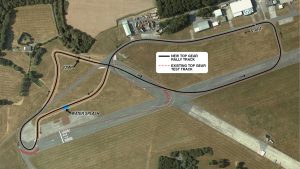
That advantage would show immediately on Dunsfold’s long straights. The run from the start line through Chicago and into Hammerhead would play directly to the car’s strengths. In isolation, those sections suggest a lap time capable of troubling serious supercars.
But the Top Gear track is not a drag strip stitched together. It punishes cars that cannot brake, rotate and carry speed through fast corners.
A Tesla Model S Plaid Lap Time Is Not a Drag Race
Dunsfold’s layout exposes a crucial truth: mass is the tax every high-performance EV must pay. At over two tonnes, the Plaid carries far more weight than the lightweight machines that dominate the board.
Corners like Follow Through and Gambon demand stability and commitment at speed. The best performers here are not simply powerful—they generate downforce, maintain composure under load and shed speed without drama. That is where cars like the Porsche 911 GT3 RS and Aston Martin Valkyrie separate themselves.
A Plaid, even with exceptional traction, must work harder to manage inertia. Braking zones would be longer, transitions slower, and tire wear more punishing. The result is a lap defined not by its fastest sections, but by how much time it loses when physics catches up.
The Track Package Changes the Car That Turns Up
There is an important distinction between a standard Plaid and one prepared for circuit work. The Track Package is essential if this car is to compete seriously on a lap board.
Tesla’s performance configuration introduces carbon-ceramic brakes, stickier tires and chassis tuning designed for sustained high-speed use. It also works alongside software adjustments that alter cooling, torque distribution and stability thresholds, as detailed in track-focused performance settings.
Without those changes, the Plaid’s raw power risks overwhelming its ability to repeat performance through a full lap. With them, it becomes a far more credible circuit machine—though still one shaped by its size and weight.
Where It Would Land on the Board
To understand the Plaid’s likely position, it helps to compare it with known benchmarks from the same track:
| Benchmark car | Dunsfold lap time | What it suggests |
|---|---|---|
| Aston Martin Valkyrie | 1:09.7 | Extreme aero and low weight remain untouchable |
| Ferrari SF90 Stradale | 1:11.3 | Hybrid power plus downforce beats raw acceleration |
| Pagani Huayra | 1:13.8 | Lightweight engineering still matters |
| Porsche Taycan Turbo S | 1:17.6 | EV baseline for handling-focused performance |
| Mercedes SLS Electric Drive | 1:21.7 | Earlier EV limitations in braking and weight |
| Tesla Roadster (original) | 1:27.2 | Historical reference point for electric pace |
| Tesla Model S Plaid (projected) | ~1:16–1:18 | Estimate based on track-focused configuration |
The most defensible projection places the Plaid somewhere in the high 1:16s to low 1:18s, depending on conditions and setup. That would comfortably beat older electric entries and challenge early-2010s supercars.
It would not, however, threaten the modern elite. Cars built around aerodynamic grip and lightweight construction still hold a decisive edge.

The Pressure Points That Decide the Lap
A single Dunsfold lap is a narrow window where everything must align. For the Plaid, several variables become critical.
First is temperature. Battery performance, tire grip and brake efficiency all depend on precise thermal management. A perfectly prepared run could unlock a significantly faster lap than a cold start.
Second is consistency. The Top Gear format favors a one-lap format, which actually suits the Plaid. It does not need to sustain performance over multiple laps—only to deliver one clean, optimized run.
Third is the driver. Extracting the best from a heavy, high-powered EV requires careful balance. Too aggressive on entry, and weight works against the car. Too cautious, and the advantage of acceleration disappears.
These factors mean the Plaid’s lap is not fixed. It is a range shaped by preparation, conditions and execution.
It Would Beat History, Not the Board’s King
A credible Tesla Model S Plaid lap time would rewrite large sections of the classic board. It would outpace older supercars, redefine expectations for electric performance and prove that acceleration alone can carry surprising distance on a technical track.
But it would not take the crown. The current road-car benchmark at Dunsfold represents a different philosophy—one built around downforce, weight reduction and circuit-first engineering.
The Plaid shows how far electric performance has come. It also reveals what still separates a brutally fast road car from a true lap-time specialist.