The Richmond Race Doubleheader on August 14-15, 2026, gave Richmond Raceway a useful stress test for its revised fan-experience model: not just whether spectators had more to do, but whether the venue could spread crowd load, extend dwell time, improve access to the competitive environment and reduce the friction that often defines a short-track weekend.
That distinction matters. In NASCAR, a fan-experience change is not simply a matter of adding entertainment outside the gates. At a track such as Richmond, where the racing product is compressed into a compact, high-intensity oval setting, the best additions are the ones that connect spectators more closely to preparation, garage rhythm, driver movement, pit-road timing and the event’s operational flow.
The context was important. Richmond Magazine reported that Richmond Raceway recorded its first sell-out since 2007 during the August 11, 2025 Cup race, and Raceway President Lori Waran said preparation began the day after that event to make the experience better for returning spectators Richmond Magazine. The August 2026 weekend therefore was not built from a neutral baseline. It followed a demand signal strong enough to force the track to examine where the experience could either scale cleanly or break down under crowd pressure.
Why The Richmond Race Doubleheader Changed The Fan Flow
Race Week Shifted Pressure Away From Race Day
For the Richmond Race Doubleheader, the most significant change was the way Richmond Raceway expanded activity before the green flag weekend. The track announced Race Week programming across August 8-12, 2026, including movie screenings, live music, a Fan Track Walk, youth racing, an art exhibit, local business showcases and other lead-in events before the August 14-15 race weekend Richmond Raceway.
From an event-operations standpoint, that mattered because it separated fan demand into layers. A traditional race weekend forces too much of the customer experience into a narrow arrival window: parking, gate entry, merchandise, concessions, garage access and grandstand movement all peak within a small number of hours. The expanded Race Week format allowed the facility to begin engaging spectators before the competition window, which is useful for a venue expecting high demand after a prior sell-out.
Not every pre-race activation directly changes the racing product. A movie screening does not alter tire falloff, restart lane choice or pit-cycle exposure. Yet these events can change the operational profile around the race. If some spectators arrive earlier, stay longer or interact with the facility before race day, the venue has more chances to distribute traffic, explain access points and build familiarity with the site layout.
Richmond Race Doubleheader Access Pattern
The clearest racing-adjacent feature remained the infield access model. The Virginia Is For Lovers Infield FanGrounds allowed paid access to areas where spectators could walk through garages, observe crew and team preparation, visit victory lane and see driver introductions during designated FanGrounds hours. Based on the research notes, FanGrounds hours on Saturday, August 15, 2026, began at 12:30 p.m. and ran until post-race.
That is the part of the fan product most closely tied to competition. Garage visibility changes how spectators interpret a race. Instead of seeing only the finished spectacle from the grandstand, they can watch the pre-race cadence: crew members working through final checks, teams managing timing, and drivers moving through pre-event obligations. For a technically literate fan, that access helps connect the visible race to the preparation sequence behind it.
FanGrounds And Fan Zone Access Became The Core Product
Immersion Worked Because It Was Track-Specific
Richmond’s stronger fan-experience package did not appear to depend on a single attraction. It worked because several activities were positioned around the track’s competition environment. The Fan Zone, placed between parking and gates, reportedly included expanded interactive booths, local business displays, art exhibits, youth racing presence, giveaways and a wider food-truck selection. That location was operationally logical: it caught spectators during the natural movement from parking areas toward entry points rather than forcing a separate trip to a distant activation area.
The track also used race-adjacent programming such as fan Q&A appearances, autograph sessions and front-stretch track walks. Those elements have competitive value because they reinforce the identity of the event as a live sporting operation, not only a broadcast product. The front-stretch walk, in particular, gives fans a better spatial understanding of the surface, the banking environment and the narrow margins that define short-track restarts.
After the Richmond Race Doubleheader, the strongest lesson was that access has to feel connected to racing decisions. FanGrounds access was effective because it let spectators observe team preparation. Driver introductions worked because they led directly into the competitive window. Youth racing and local displays were useful because they broadened the motorsports ecosystem around the event without pulling the focus away from the track.
Merchandise Demand Signaled Stronger Engagement
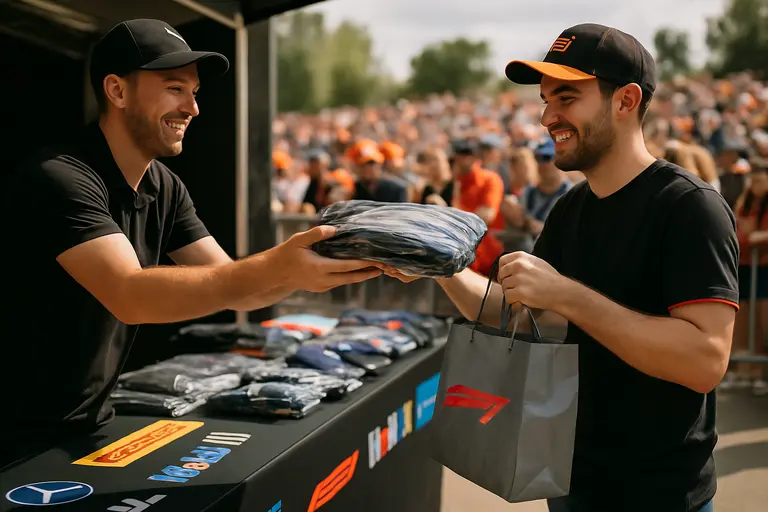
The research notes also point to sharply higher merchandise demand during the August 14-15 weekend, including featured die-cast products reportedly selling out. That is not only a retail note. In racing terms, merchandise movement is a proxy for emotional investment in drivers, teams and liveries. When a die-cast tied to a specific driver and sponsor sells out during a race weekend, it suggests fans were not treating the event as generic entertainment. They were attaching spending and identity to the competitive field.
That said, merchandise sell-outs are also a planning issue. If demand exceeds stock for featured products, the venue and sellers gain revenue urgency but risk leaving some fans dissatisfied. Without verified inventory data, it is not possible to say whether the sell-outs reflected exceptional demand, conservative stocking or both. The supported conclusion is narrower: the weekend created enough driver-linked demand for certain featured products to run out.
Event Logistics Still Set The Ceiling
Heat And Shade Remained Performance Factors
The strongest limitation identified in the research was comfort during a mid-August race weekend. Attendee feedback in the notes described very hot conditions, scarce shade in some FanGrounds and Fan Zone areas, and concern around hydration and food or dessert availability. Because those comments were not paired with verified heat-index readings, concession wait-time data or medical-response statistics, they should be treated as qualitative signals rather than quantified failures.
Even so, heat is not a secondary issue for fan experience at a summer NASCAR event. It affects dwell time, queue tolerance, infield movement and the willingness of spectators to use paid access areas. A FanGrounds product loses some of its value if spectators shorten their garage walk because the thermal load is uncomfortable. Shade, water access and clear wayfinding to cooling points are therefore part of the event’s competitive presentation, because they influence how long fans remain close to the team-preparation areas.
Egress Management Used Post-Race Dwell Time
The August 15, 2026 post-race Drive-Out Movie after the Cook Out 400 was one of the more interesting logistics choices. The concept encouraged spectators to remain in their vehicles for a film rather than joining the immediate exit wave. That approach does not require a change to the road network; it attempts to reshape departure timing.
Without official egress timing data, the effect cannot be measured from the supplied research. The idea, however, was sound from a crowd-flow perspective. Short-track events can produce sharp exit peaks because the venue empties rapidly after the checkered flag. If even a portion of spectators delay departure, traffic demand can flatten. The key question for future analysis is whether enough people stayed to reduce congestion in a measurable way.
Commercial Signals From The Weekend
Sell-Out Pressure Changed The Operating Standard
The 2025 sell-out changed the standard for the 2026 event. A track that has just ended an 18-year sell-out gap cannot treat the next major weekend as business as usual. The facility has to assume that new or returning spectators will judge the entire process: arrival, parking, gates, concessions, restrooms, infield access, sightlines, mobile ticketing, Wi-Fi, driver access and post-race departure.
The research notes identify several convenience elements, including free guest Wi-Fi, mobile-ticket preparation, interactive facility maps through the NASCAR Tracks App, live leaderboards and scanner rentals. Those systems matter because NASCAR spectators often manage several information channels at once: the live race, timing data, scanner audio, social coordination and facility movement. If connectivity or ticketing friction rises, the venue loses efficiency before the race even begins.
Accessibility and parking also sat inside the larger operating picture. The notes describe premium parking near the Fan Zone, campgrounds opening ahead of the race weekend, multiple grandstand entry gates and ADA seating and access areas. Those items are not glamorous, but they determine whether expanded programming can scale. A larger Fan Zone is less useful if parking, gates or accessible routes cannot absorb the added movement.
Broadcast Numbers Were Not A Reliable Measure Here
The research included an unverified broadcast-viewership figure from a non-primary source, but no official Nielsen, NASCAR or network confirmation was provided in the approved source set. For that reason, it should not be used as a firm performance measure in this assessment. The fan-experience evaluation is stronger when it stays with confirmed venue programming, documented access changes and supported post-event signals.
That constraint matters analytically. A race can gain television audience for reasons unrelated to the on-site experience: playoff context, weather elsewhere, network lead-ins or competitive storylines. On-site fan experience should be judged first through attendance pressure, facility operations, access quality, concession performance, egress data and direct survey results. Those last two categories were not available in the supplied research, so any precise satisfaction score would be speculative.
Richmond Race Doubleheader Fan Experience Verdict
The Richmond Race Doubleheader showed a venue moving from a race-only weekend toward a broader motorsports event structure, while still keeping its strongest assets tied to competition. Race Week programming spread engagement across more days. FanGrounds access brought spectators closer to garage preparation and driver movement. The Fan Zone gave the facility a more active transition area between parking and the gates. The post-race Drive-Out Movie addressed egress through delayed departure rather than infrastructure expansion.
The weak points were equally clear. Heat exposure, shade availability, concession variety and verifiable logistics data remain the areas that would determine whether the model can improve from a good event package to a repeatable high-capacity system. Richmond Raceway added more touchpoints for fans, but the next level of assessment requires harder numbers: gate processing times, concession queue duration, FanGrounds usage, ADA route performance, post-race exit timing and post-event satisfaction scores.
On the evidence available, the August 14-15, 2026 weekend was a credible step forward because its best changes supported racing immersion rather than distracting from it. The track’s challenge is now precision: preserving garage access, driver proximity and short-track atmosphere while reducing the comfort and traffic frictions that become more visible when demand rises.