The Markham Track Logistics delay at the 2026 Ontario Honda Dealers Indy turned the series’ first visit to the city into a hard case study in temporary-circuit execution. The event was held from Friday, August 14 through Sunday, August 16, 2026, after the race moved from its long-time Toronto Exhibition Place base to a newly built downtown Markham street course. The racing issue was not simply that Friday running was lost. It was that the loss came from unfinished circuit infrastructure, meaning teams, officials and spectators all had to adjust before the first competitive laps had been completed.
The inaugural Markham event used a 12-turn, 3.52-kilometer layout with a double-sided pit lane, located between Kennedy Road, Enterprise Boulevard, the Unionville GO tracks and Highway 407, according to the City of Markham event page. That profile matters because street circuits do not have the fixed operating margin of permanent venues. Every barrier line, marshal opening, pedestrian route and pit-lane installation has to be finished before race control can treat the venue as competition-ready.
By September 3, 2026, the most useful reading of the Markham delay was retrospective: what the event revealed about schedule risk, circuit build sequencing, and how quickly a compressed IndyCar weekend can become a sporting problem.
Markham Track Logistics Set The Competitive Frame
Markham Track Logistics On A New Street Circuit
The Markham circuit was not an established racing venue being reopened. It was a fresh temporary street build, with racing infrastructure laid into an urban district that still had to handle access, closures and post-event teardown. The City’s published timing put full road closures from August 12 at 9 PM through August 18 at 6 AM, with teardown estimated to continue until around August 27, 2026. That gave organizers a narrow operating window between civic access control, circuit completion and the first scheduled track activity.
That was the competitive cost of Markham Track Logistics: the delay did not sit outside the racing product. It reshaped it. A temporary street race depends on certification before speed, and certification depends on every safety-critical element being in place. If any of those pieces remain incomplete, the track does not move from construction site to race circuit.
The Move From Exhibition Place Changed The Baseline
The event had previously been associated with Toronto’s Exhibition Place, where the race had been held since 1986. Moving to Markham changed the operational baseline. Established street races still require annual assembly, but institutional knowledge, proven access routes and familiar build sequences reduce uncertainty. A debut venue does not have the same cushion.
The downtown Markham layout also included a double-sided pit lane, which placed extra emphasis on safe lane geometry, crew access and race-control visibility. Even without making claims beyond the published layout, the racing implication is clear: pit-lane design is not a cosmetic feature. It affects team operations, marshal coverage and how officials supervise live sessions.
How Friday’s Cancellation Compressed The Run Plan
The First Day Never Reached Green-Flag Work
On Friday, August 14, 2026, the scheduled opening day of practice and qualifying was cancelled because the track had not been completed in time for safety certification, as reported by CityNews Toronto. The originally scheduled 3:00 PM ET practice session was first delayed, then moved toward an evening slot, and was ultimately cancelled at about 5:30 PM ET.
For teams, that sequence was disruptive in a very specific way. Crews had to keep cars and personnel in a state of readiness while the operating assumptions changed. Engineers could not collect the first live data on tire behavior, braking zones, bumps, grip evolution or energy use across the new 12-turn course. Drivers lost the low-risk exploration phase that normally defines the first practice on a street circuit.
This is where a logistics delay becomes a competition variable. A new track already asks drivers to build confidence corner by corner. Removing Friday practice reduced the time available to identify overtaking points, assess escape-road risk, refine ride heights for surface variation, and calibrate braking references around walls and fencing.
The Revised Saturday Sequence Raised The Workload
Saturday, August 15, 2026, carried the revised plan: first practice at 10:00 AM ET, second practice at 2:30 PM ET, and qualifying at 6:30 PM ET. The racing format therefore became more compressed, with less recovery time between discovery, setup change and qualifying commitment.
That compression affects different competitors in different ways. Experienced drivers often shorten the learning curve at new street venues, but they still need data. Newer drivers need laps for rhythm and spatial confidence. Teams with strong simulation correlation may adapt more quickly, but a brand-new street circuit can expose gaps between model and reality. Surface joints, dust, barrier placement and changing shade patterns can only be fully assessed once cars run at speed.
For a deeper event-specific logistics treatment, the earlier opening-day delay analysis fits the same operational chain: schedule change, temporary-circuit readiness and the sporting effect of lost preparation.
Access And Safety Infrastructure Became Race Control Issues
Pedestrian Flow Was Part Of The Circuit System
The reported infrastructure issues included an incomplete pedestrian bridge over Enterprise Boulevard, intended to connect parking with the spectator area. In a racing context, that is not only a crowd-service problem. Pedestrian bridges on street courses can protect controlled access zones and reduce pressure on at-grade crossings near restricted areas.
When access infrastructure is unfinished, organizers face a choice between delaying competition or allowing movement patterns that may create safety or operational conflict. Race control does not certify a circuit only by measuring the racing line. It also needs confidence that people, emergency crews and officials can move through the venue without adding risk during live sessions.
Marshal Flagging Positions Were A Certification Detail
CityNews also reported missing “ports” in safety fencing that were required for marshals to wave hazard flags. That detail goes directly to race operations. Marshal visibility is one of the basic control layers on a street circuit. Drivers depend on flag signals where walls, corner geometry or traffic can limit sight lines.
From a race operations view, Markham Track Logistics failed at the worst possible point: not in a hospitality area removed from competition, but in safety features needed before cars could run. Once that happens, a delayed session is not a discretionary call. It is the correct response to an incomplete certification environment.
- Event dates: August 14-16, 2026.
- Course: 12 turns over 3.52 kilometers, or 2.19 miles.
- Friday impact: opening practice and qualifying activity was cancelled.
- Saturday reset: practice and qualifying were rescheduled into one tighter day.
- Public works window: road closures ran from August 12 at 9 PM to August 18 at 6 AM, with teardown estimated until around August 27.
What Teams Lost From The Original Friday Program
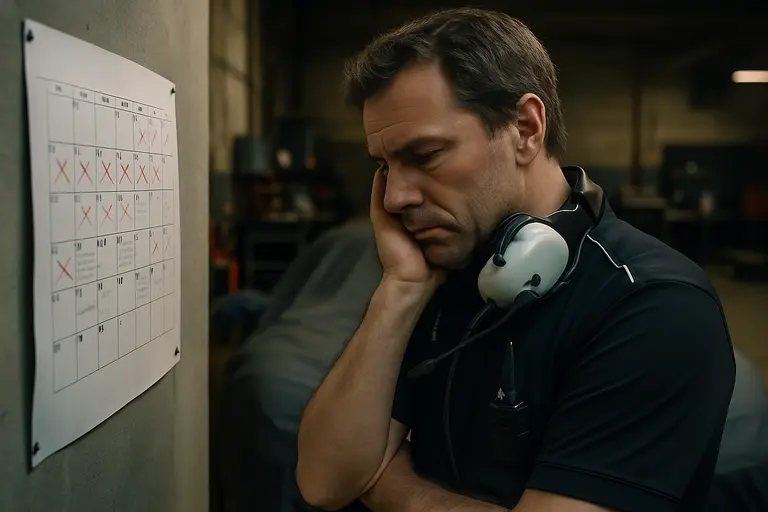
Setup Time Was The First Sporting Loss
On a permanent circuit, teams often arrive with years of setup history. At a debut street venue, Friday practice creates the first reliable baseline. Teams use it to check damper response, gearing, brake migration, tire warm-up, ride quality over patched pavement, and the penalty for running too much or too little downforce.
Losing that session meant Saturday work had to cover more ground. The sequence from installation runs to qualifying trim became shorter. Any red flag, traffic problem or technical issue on Saturday would have carried a heavier penalty because there was no Friday data bank to fall back on.
Drivers Lost Low-Pressure Track Acclimation
Drivers also lost the least pressurized laps of the weekend. The first practice at a new street circuit is where steering inputs become less tentative, braking points move deeper, and wall proximity becomes a measured risk rather than an unknown. Without that Friday phase, the first serious data-gathering laps sat closer to qualifying decisions.
That did not mean the rest of the event could not function. The research record indicates that Saturday and Sunday racing sessions followed after the Friday disruption, with fewer reported interruptions. But the sporting shape of the weekend had already changed. The opening cancellation left a lasting mark on how teams reached their setups and how drivers built confidence.
Markham Track Logistics Lessons From The Debut
The City of Markham’s capital spending on the event exceeded $12 million CAD, mainly for one-time infrastructure items such as repaving, with provincial funding of $1.5 million and federal funding of $3.5 million announced in late July 2026. Those numbers help explain the scale of the civic commitment, but spending alone did not guarantee track readiness by the opening practice window.
The lasting racing point from Markham Track Logistics is that a temporary IndyCar circuit is certified as a system, not as a collection of nearly finished parts. Barriers, fencing, marshal access, pedestrian movement, road closures, pit-lane function and emergency routes all have to align before the first timed lap.
For spectators, the Friday experience was defined by waiting, limited communication and reports of incomplete facility setup, including access to necessities such as water stations. For teams, the same delay removed the first layer of track learning. For organizers, it created a public test of whether a first-year street event could recover once the competition schedule had been compressed.
The Markham race did recover enough for subsequent running on August 15 and August 16, 2026, but the opening-day cancellation remained the defining operational fact of the debut. The lesson for any future edition is direct: street-circuit construction has to reach certification quality before the sporting timetable begins. If it does not, the racing product absorbs the cost immediately.