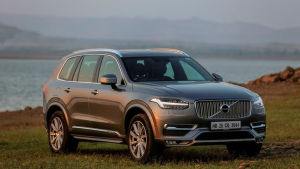
The Xiaomi Sky Nomad SUV is not just another Chinese electric vehicle story. It is the clearest sign yet that technology companies are no longer satisfied with supplying screens, apps, and software to carmakers they want to become carmakers themselves.
That matters because Xiaomi already understands the consumer ecosystem better than many traditional auto brands. Its move from phones into vehicles connects directly with the broader idea of Xiaomi automotive ambitions, where the car becomes another device in a connected lifestyle rather than a standalone machine parked in the driveway.
Xiaomi Sky Nomad SUV Moves Beyond The Phone Business
Xiaomi’s new Sky Nomad series, known in China as Xiaomi Pengcheng, pushes the company deeper into the auto market with extended-range electric SUVs. The timing is not accidental. Smartphone growth has matured, home electronics are highly competitive, and the company needs larger products that can open new revenue lanes.
Cars offer that opportunity, but they also raise the stakes. A phone can be replaced every few years. A vehicle must survive regulation, service networks, safety expectations, warranties, resale concerns, software support, and brutal manufacturing economics.
That is why the Xiaomi Sky Nomad SUV is important. It shows the company is not treating the car business as a side experiment after the SU7 sedan and YU7 crossover. It is widening the product map into family-sized vehicles and a powertrain format that tries to solve one of the biggest buyer objections around EVs: range anxiety.
The official announcement frames Sky Nomad as a line of “smart, versatile, spacious” SUVs, while the broader market context sits in Xiaomi’s new SUV series. That language is revealing. Xiaomi is not selling only transportation. It is selling space, software, and lifestyle utility.
The Extended-Range Choice Is The Real Signal
Sky Nomad is not being positioned as a simple battery-electric SUV. It is entering the extended-range electric vehicle category, commonly called EREV. These vehicles use electric drive as the core experience, but include a combustion engine that works as a generator to extend range.
That may sound like a compromise, but in China’s market it can be a smart one. Battery-only EVs remain highly competitive, yet buyers still care about long-distance flexibility, charging access, family use, and confidence outside major urban charging corridors.
Xiaomi filed for a new extended-range EV with Chinese regulatory authorities before the Sky Nomad reveal, with the proposal moving through public-comment steps in June. That extended-range EV filing pointed toward a company preparing to expand beyond pure battery-powered models.
The powertrain decision also puts Xiaomi closer to rivals such as Li Auto, which built a major position around family-oriented extended-range SUVs. This is the lesson Xiaomi appears to understand: the next wave of EV growth may not be won only by the purest technology. It may be won by the format that makes buyers feel least restricted.
That makes Sky Nomad a practical expansion play, not just a branding exercise.
Tech Companies Are Learning The Car Market Fast
The auto industry used to worry about Apple, Google, Sony, and other technology names becoming powerful suppliers inside the cabin. China’s market has turned that concern into something more direct. Xiaomi is not simply writing software for someone else’s dashboard. It is building the dashboard, the car around it, and the ecosystem behind it.
That changes the competitive equation. Traditional automakers think in platforms, trims, engines, dealer networks, and model cycles. Xiaomi thinks in devices, user accounts, software updates, connected homes, mobile integration, and brand loyalty across categories.
| Industry Shift | Traditional Automaker Advantage | Tech-Brand Advantage |
|---|---|---|
| Product development | Manufacturing history and vehicle engineering | Faster consumer-electronics iteration |
| Cabin experience | Physical controls and legacy ergonomics | Apps, screens, accounts, and connected services |
| Buyer relationship | Dealer and service network | Existing device ecosystem and user loyalty |
| EV positioning | Battery platforms and safety validation | Software identity and smart-living integration |
| Expansion risk | Slower but experienced scaling | Faster growth with thinner auto margins |
The table shows why Xiaomi’s entrance matters. Traditional automakers still have deep advantages in safety validation, service, durability, and production discipline. But tech brands can make cars feel familiar to users who already live inside their software ecosystems.
That is the disruption. The vehicle is no longer judged only as a machine. It is judged as a connected product.
Why The SUV Format Matters More Than A Sedan
The SU7 gave Xiaomi attention. A sedan can build credibility, especially when it looks sharp, performs well, and gives buyers a reason to compare it with established EV names. But SUVs are where broader family demand often lives.
The Sky Nomad move pushes Xiaomi into a segment that can carry more volume, more utility, and potentially stronger daily-use appeal. A smart SUV can be pitched as a commuter, family hauler, travel tool, connected living space, and technology showcase at the same time.
That explains why the “second home” idea matters. A vehicle with screens, connectivity, storage, comfort features, and extended driving flexibility can be sold as more than transportation. It becomes another room in the owner’s digital life.
That is also where Xiaomi’s background becomes dangerous for legacy brands. A company that already sells phones, smart-home devices, wearables, tablets, and appliances can imagine the vehicle as part of a larger user loop. The car can talk to the phone. The phone can control the home. The home can feed the account. The account can shape the vehicle experience.
Traditional automakers can build apps, but tech companies already own daily digital habits. That is the hidden advantage Xiaomi is trying to convert into car sales.
The Hard Part Starts After The Hype
Xiaomi has momentum, but the car business is unforgiving. Building attractive vehicles is only the first test. Delivering them profitably, servicing them consistently, protecting quality, and managing buyer expectations over years is much harder.
Auto margins are thinner than smartphone margins. Capital needs are heavier. Recalls are more public. Software bugs can affect safety perception. Supply-chain problems can delay repairs. A weak service experience can damage a car brand faster than a slow app update damages a phone brand.
Xiaomi also faces a crowded Chinese EV market where price competition is intense and consumer attention moves quickly. Early enthusiasm can help launch a model, but long-term success depends on production discipline, owner satisfaction, and whether the brand can keep improving vehicles without burning through capital.
Global expansion adds another layer. Xiaomi has not yet exported vehicles at the scale of some Chinese rivals, but Europe is part of its stated direction. Once a Chinese tech brand starts entering overseas car markets, it must face safety regulation, tariffs, data-security questions, parts logistics, dealer or direct-sales strategy, and brand trust from buyers who may know the phones but not the cars.
That is where execution becomes everything.
The Next Pressure Point Is Global Trust
Sky Nomad should make traditional automakers pay attention, but it should also make buyers ask sharper questions. A tech company can make a car feel more modern, but modern does not automatically mean easy to own.
The next pressure point will be trust: trust in the software, trust in the service network, trust in parts support, trust in battery and range claims, trust in resale value, and trust that the brand will stay committed after the launch buzz fades.
That is why Xiaomi’s SUV expansion is bigger than one model line. It represents a new competitive reality where consumer-electronics companies can move quickly into vehicles because the car itself is becoming more digital, more connected, and more dependent on software identity.
The Xiaomi Sky Nomad SUV shows where the industry is heading. The next major car rival may not come from a century-old automaker. It may come from the phone in a buyer’s pocket, the smart screen in their home, and the software account they already use every day.