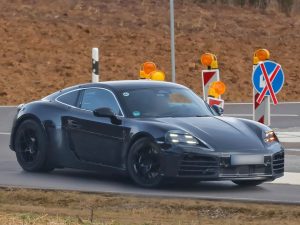
The Lotus Type 135 Hybrid V8 matters because it reverses one of the loudest assumptions about the next era of exotic cars: that every serious future performance machine had to be fully electric. Lotus is now teasing a nearly 1,000-hp hybrid V8 supercar for 2028, and it feels like a strategic reset built around heritage and urgency.
Why The Lotus Type 135 Hybrid V8 Matters Right Now
Lotus has always carried a strange kind of pressure. It built its reputation on lightness, steering feel, and engineering intelligence rather than brute force. That makes the Lotus Type 135 Hybrid V8 especially fascinating. It points toward a future where Lotus is not abandoning performance purity, but redefining it with combustion, electrification, and old-school emotional clarity.
| Key Angle | Why It Matters |
|---|---|
| Lotus Type 135 | Hybrid V8 supercar teased for 2028 |
| Power Target | Nearly 1,000 hp, placing Lotus back in the exotic-car fight |
| Brand Shift | Moves Lotus away from an all-EV-only future |
| Esprit Connection | Creates a possible spiritual link to Lotus’ classic V8 icon |
A hybrid V8 supercar is expected to approach 1,000 horsepower. The second is more important: this marks a move away from the earlier idea that Lotus would become an all-electric-only brand by the end of the decade. The Lotus Type 135 Hybrid V8 gives enthusiasts a different question to ask. What if the next great Lotus does not reject electricity, but uses it to make a combustion sports car feel newly relevant?
The Type 135 is not merely another high-output teaser. It is Lotus acknowledging that the market, the technology, and the enthusiast base are not moving in one neat direction. The future may be electric, but the path there is messier and more emotional than many brands admitted. That creates tension and opportunity.
A New Esprit Shadow Hangs Over The Teaser
The Esprit comparison is impossible to avoid. Lotus has not confirmed that the Type 135 will officially wear the Esprit name, but the idea is already hanging over the car because the ingredients are too familiar to ignore: a dramatic Lotus flagship, a V8 connection, a wedge of nostalgia, and the promise of something above the Emira. The name carries memory, but also risk.
Reviving the Esprit spirit is not easy. The original car became iconic because it looked futuristic, felt exotic, and stood apart from the European supercar establishment. A modern version would face a much harsher market. Rivals across the exotic segment have turned hybrid performance into a battleground. A new Lotus cannot survive on romance alone.
That is why the Type 135 needs to be more than a badge revival. It has to create its own case for existence. It needs to offer the lightness, response, and driver connection that Lotus buyers expect, while delivering enough technology for modern hybrid supercars. That is a difficult balance, and it will define whether the car feels like a genuine comeback or a clever marketing exercise.
The Nearly 1,000-HP Number Changes The Lotus Conversation
Lotus and horsepower have always had a complicated relationship. The brand’s most respected cars were rarely about winning spec-sheet wars. They were about extracting more from less. That philosophy built credibility, but it also makes a nearly 1,000-hp Lotus feel almost shocking. The number creates pressure because it pushes against the company’s traditional discipline.
Yet the power figure also makes sense. A modern halo car has to cut through noise. In a market where electric sedans can produce absurd acceleration and hybrid supercars routinely deliver extreme output, Lotus cannot return with a flagship that feels modest. The Type 135 needs a headline strong enough to force people to look again and reconsider the brand’s authority.
The challenge is weight. Lotus cannot simply add power, batteries, and hybrid systems without protecting the light, responsive character that makes the badge matter. If the final car feels heavy, filtered, or numb, the horsepower will not save it. If Lotus manages the mass well, the powertrain could become a new Lotus argument: only add what earns its place. That would be real execution.
The Shift Away From EV-Only Is The Bigger Story
The Type 135 teaser is tied to a larger business correction. Lotus had been moving toward an all-electric identity, helped by models such as the Evija, Eletre, and Emeya. That direction made sense on paper. Premium EVs were gaining attention, governments were pushing electrification, and performance brands were trying to position themselves for a zero-emissions future. Then reality became less simple.
Demand patterns changed. Incentives softened in some markets. Buyers became more cautious about price, charging, and range. Performance enthusiasts also remained deeply attached to sound, heat, and mechanical drama. The Lotus hybrid supercar plan speaks directly to that moment because it frames hybridization as a bridge, not a retreat.
That distinction matters. A hybrid V8 is not an anti-EV statement. It is a recognition that different segments require different answers. A luxury SUV buyer may prioritize range and smoothness. A supercar buyer may demand sound, rarity, throttle character, and emotional intensity. The smartest brands will not force one solution across every product. They will apply judgment.
What The Type 135 Means For Lotus Identity
The Type 135 could become the car that settles a debate inside the Lotus brand. Is modern Lotus a lightweight sports-car company, an electric lifestyle brand, a Chinese-backed luxury-performance player, or a British engineering name with global ambitions? The answer may have to be all of those, but a halo supercar can bring focus.
A great flagship gives a brand a center of gravity. It does not need to sell in large numbers to matter. It sets the emotional direction. For Lotus, a V8 hybrid supercar says the brand still wants to be judged by drivers, not only by software features and battery size. That is real positioning.
That matters because Lotus has been stretched across several identities. The Emira keeps the traditional sports-car flame alive. The Eletre and Emeya push the brand into luxury EV territory. The Evija proves Lotus can build an extreme electric halo. The Type 135, if done correctly, could connect those threads rather than compete with them. It could give the lineup coherence.

A Hybrid V8 Could Protect The Driver’s Car
The most interesting part of this story is not the V8 alone. It is the possibility that hybrid technology could preserve the driver’s car instead of diluting it. That may sound contradictory, but it is becoming one of the central ideas in high-end performance engineering. Electric motors can sharpen response, fill torque gaps, improve traction, and allow a combustion engine to operate with more freedom. Used well, they create precision.
Used poorly, they create distance. That is the danger. A Lotus has to communicate through its steering, chassis, pedals, and body control. If the hybrid system makes the car feel artificially boosted or over-managed, the brand loses trust and connection. Enthusiasts will forgive complexity only if it produces a better drive.
The best version of the Type 135 would not feel like a computer-assisted missile. It would feel like a sharp, breathing machine with electrical assistance woven into the experience. The V8 would provide the drama. The motors would provide immediacy. The chassis would provide the Lotus signature. That combination could be powerful if the engineering is honest.
How The Type 135 Compares With Today’s Hybrid Supercars
A nearly 1,000-hp Lotus will not arrive in an empty field. By 2028, hybrid supercars will be the establishment, not the exception. Ferrari, Lamborghini, McLaren, and others have already shown how quickly the formula is maturing. Lotus will need to compete against brands with deeper supercar histories and larger customer bases. That demands scale and discipline.
That sounds daunting, but it gives Lotus an opening. Many modern supercars are extraordinarily fast, but some feel dense with systems. Lotus can attack from another angle: lower mass, better steering, more natural chassis behavior, and a cleaner driver interface. That is where the brand’s quality has always lived.
The internal comparison may be just as important. Readers following extreme-performance machines can see how niche brands are pushing horsepower and identity in different directions through this high-output vehicle perspective. Lotus, by contrast, has to make speed feel sophisticated rather than outrageous. Its edge should be restraint, not shock value.
The Business Case Is As Important As The Car
A car like the Type 135 is emotional, but the decision behind it is practical. Lotus needs products that build desire while supporting a viable business model. A pure EV strategy may have sounded clean, but performance brands cannot ignore how customers actually behave. If buyers still want combustion drama in their most expensive sports cars, Lotus has to listen.
That does not mean the company can abandon electrification. It means electrification must be used where it adds value and purpose. In a supercar, that could mean faster acceleration, stronger torque delivery, sharper stability control, and improved flexibility. In other models, it may mean range, quietness, and efficiency. The important point is that technology should serve the vehicle’s purpose.
The Type 135 is also a credibility test for Lotus under Geely ownership. The company has access to resources it never had in its old form, but with resources comes expectation. A flagship hybrid supercar must show that Lotus can scale ambition without losing personality. That is the accountability moment.
The Risks Lotus Cannot Ignore
The first risk is weight. Every hybrid component has consequences, and Lotus buyers notice consequences quickly. The company’s reputation leaves little room for a heavy, overcomplicated car wearing a famous badge. If the Type 135 feels like a conventional hybrid supercar with Lotus styling, it will disappoint. That is the cost of the concept.
The second risk is price positioning. Lotus cannot price the car like a bargain alternative if the technology is serious, yet it also cannot assume buyers will treat it like a Ferrari or Lamborghini simply because the horsepower is there. It needs a clear ownership proposition. The buyer must feel that the car offers choice.
The third risk is expectation. If the Esprit name returns, nostalgia will become both an asset and a burden. Enthusiasts will bring memories, arguments, and high standards. A revived name can create instant attention, but it can also sharpen criticism. That tension requires confidence.
Why This Could Be Lotus At Its Best
The optimistic case is strong. Lotus has always been most interesting when it solves a performance problem differently from everyone else. A hybrid V8 supercar gives the company a chance to reinterpret its lightness philosophy for a heavier, more regulated, more electrified era. That is a worthwhile challenge.
A great Type 135 could prove that electrification does not have to flatten character. It could show that a V8 can live inside a responsible modern performance architecture without becoming a museum piece. It could also make Lotus feel dangerous again in the best possible way: not reckless, but creatively competitive. That would restore momentum.
There is also something emotionally satisfying about Lotus refusing to become predictable. The market expected a cleaner EV march. Instead, we are getting a hybrid V8 supercar that may carry the spirit of the Esprit into a new era. That pivot could be what the brand needed.
What Enthusiasts Should Watch Next
The teaser is only the beginning. The details that matter most have not fully arrived yet. Weight, battery size, engine source, motor layout, chassis construction, aero philosophy, and production numbers will shape the final judgment. Power is the easy part to understand. Character is harder.
I would watch the language Lotus uses over the next year. If the company talks mainly about power, the car risks becoming another number-chasing supercar. If it talks about weight, feel, response, packaging, and repeatable performance, then the Type 135 may be more serious than the headline suggests. That would show maturity.
The launch timeline also matters. A 2028 debut gives Lotus time to tune the car carefully, but it also means rivals will keep moving. The Type 135 cannot arrive feeling like a reaction to yesterday’s market. It has to feel like a car with its own purpose.
The Lotus Type 135 Hybrid V8 Could Redefine The Brand’s Future
The Lotus Type 135 Hybrid V8 is important because it says Lotus is not content to be boxed into one future. The company can build EVs, protect the Emira’s traditional sports-car appeal, and still prepare a nearly 1,000-hp hybrid V8 supercar for the top of the range. That mix is complicated, but it may also be more honest than a simple all-electric slogan.
Lotus can use the Type 135 to show that performance still needs feel, not only acceleration. It can remind the market that a supercar should be judged by sensation, weight, response, and durability of excitement. The risk is real: if the car becomes too heavy, too expensive, or too generic, it could prove that the old Lotus magic is difficult to preserve at this level.
Still, the direction feels promising because it gives the brand a sharper story. The Lotus Type 135 Hybrid V8 is not just a return of the V8 or a possible Esprit revival. It is a test of whether a respected driver-focused brand can adapt without surrendering its soul. If Lotus gets that right, the next era of supercars becomes far more interesting.