IR-28 strategy will be defined less by one headline part than by the way IndyCar has combined powertrain, aero, suspension, safety and cockpit-control changes into a new race-management problem for teams. INDYCAR introduced the new NTT INDYCAR SERIES race car for 2028 and beyond on July 28, 2026, with a 2.4-liter twin-turbocharged V6, a fully integrated battery-based hybrid system, a lighter chassis target and revised safety architecture confirmed in the official announcement INDYCAR race car release.
The strategic consequence is clear: the IR-28 is not simply a replacement chassis. It changes the timing of attack laps, the value of clean air, the way drivers adjust balance during a stint and the engineering trade between qualifying pace and race consistency. Because the car is scheduled to compete from 2028, some effects remain projections until multi-venue testing supplies real tire, fuel and traffic data. Still, the technical direction already points toward a series in which race engineers will have more variables available from the cockpit and more pressure to use them without losing tactical clarity.
IR-28 Strategy Starts With Energy Deployment
Why IR-28 Strategy Depends On The New ESS
The most direct strategic shift comes from the hybrid system. The IR-28 will use INDYCAR’s first battery-based Energy Storage System, supplied by BOLD Technology. According to the research notes, the ESS has about 14 times the storage of the current supercapacitor system while weighing about 20 lb less. That combination matters because energy deployment becomes less of a short burst tool and more of a stint-management resource.
With greater storage capacity, teams should have more choice over where to spend hybrid energy. On a road course, that may mean saving deployment for corner exits that lead onto long straights, for out-laps after pit service, or for laps when a driver needs to clear slower traffic before the next strategic window. On an oval, the calculation may be narrower but just as severe: deployment at corner exit can defend track position, while poor timing can leave a car exposed before the next braking or lift phase.
The Power Unit Changes The Risk Profile
The 2.4-liter twin-turbocharged V6 is listed at up to 760 horsepower, with Chevrolet and Honda committed to the new powerplant. The raw number does not answer the key race-engineering question by itself. What matters is how that engine output interacts with hybrid release, fuel use, tire temperature and traffic. If the car can attack harder out of slow corners while carrying less mass, the driver may create opportunities earlier in a stint. If that pace overheats the tires or forces inefficient fuel maps, the advantage could disappear before the pit window.
That makes IR-28 strategy a mapping exercise as much as a driving exercise. Engineers will need to decide whether hybrid energy is best used to create a pass, protect a pit cycle, compress the gap to the car ahead, or reduce exposure during traffic phases. Those choices already exist in smaller form. The new storage scale makes the penalty for poor timing larger.
Lighter Mass Alters Braking And Tire Windows
A 100 Lb Reduction Changes Stint Shape
The IR-28 chassis is planned to be around 100 lb lighter than the current car, helped in part by a gearbox reduction of about 25 lb and weight savings elsewhere. In race terms, lower mass can influence braking demand, tire loading and transient response. It may help a driver rotate the car more cleanly in slow sections, reduce the energy going into the tire under braking, and make the car more responsive during direction changes.
The trap is assuming that a lighter car automatically reduces tire degradation enough to cut stops. That cannot be stated with certainty from the available research. Tire behavior depends on compound, track surface, ambient temperature, downforce level and how aggressively drivers use the added power-to-weight benefit. The more cautious reading is that teams will gain another tuning dimension: they can decide whether to spend the lighter platform on lap time, tire preservation, or a mixed approach that protects the final third of a stint.
For comparison, pit sequencing on IndyCar ovals already depends heavily on tire life, traffic and track position, as shown in our past Milwaukee Mile strategy review. The IR-28 should not remove those fundamentals. It should sharpen them because added energy tools and reduced mass will make each stint less uniform.
Brake Zones May Become Passing Zones
If testing confirms higher corner speeds and more effective acceleration, braking zones may become more contested. A driver with saved hybrid energy could force a rival to defend earlier, then use better exit deployment to complete the move on the following straight. That kind of two-corner pass is common in theory but difficult when dirty air prevents the trailing car from staying close enough. The IR-28’s aero package is aimed directly at that problem.
Wake Control And Suspension Put Traffic Back In Play
Tire Wake Conditioners Target The Following Car
The research notes point to reduced outwash and wake management as major aerodynamic priorities. New elements behind the front wheels, described as tire wake conditioners, are intended to clean the airflow and help trailing cars follow more closely. If that works across road courses, street circuits and ovals, it could reduce the defensive value of turbulent air.
This is central to IR-28 strategy because traffic often determines whether a pit call succeeds. A car that exits into a pack loses time even if its tires are fresher. A leader can control pace if the following car cannot stay attached through dirty air. Cleaner wake behavior would not make passing automatic, but it could shorten the time needed to set up a move. That places more weight on pit-wall timing. Undercuts and overcuts become more dynamic when the faster car has a better chance of converting pace into position.
Inertance Control Adds Mid-Stint Adaptability
The Custom AXIS Inertance Control Suspension System adds another technical layer. The upgraded adjustable dampers include front and rear third-element inertance systems, with the stated aim of managing pitch and improving balance when leading and when running in disturbed air. That matters because pitch stability affects platform control, aero consistency and driver confidence under braking and turn-in.
The cockpit-control changes are just as important. Mechanical knobs and handles, including anti-roll bar adjustments, are replaced by controls accessible from the steering wheel. That gives the driver faster access to balance tools without waiting for a pit stop or reaching for a physical adjuster. The risk is cognitive load. A driver already managing traffic, hybrid deployment, tire state and radio instructions now has more live tools. Teams will need disciplined procedures so that adjustability improves execution rather than creating confusion.
Safety And Information Systems Affect Race Control
Aeroscreen Integration Is More Than Packaging
The IR-28 includes a lighter, sleeker aeroscreen integrated into the chassis, a wider cockpit designed to accommodate more driver sizes, improved airflow and cooling, and stronger side-impact structures. The chassis is described in the research as being built to exceed the stricter of INDYCAR or FIA standards. Those are safety facts first, but they also affect competition. Better cooling can help driver consistency in long runs. A wider cockpit can broaden fit without forcing as many compromises. Stronger side structures affect how the survival cell is packaged around the driver.
Safety design also interacts with mass distribution and serviceability, though the research does not provide enough detail to quantify those effects. The supported point is narrower: INDYCAR has tied the new car’s competition package to an updated protection structure rather than treating safety as an add-on.
Position Lights Reduce Information Lag
Digital car-position display lights will return after being used a decade ago. The system will show a car’s racing position in practice, qualifying and races, and it can signal track conditions or problems through lights on the rear wing end fences. That will not decide race pace, but it can reduce information lag for drivers and crews. In multi-car traffic, immediate position context can help a driver judge whether to fight, yield, save energy or avoid unnecessary risk.
The first validation test was completed by Alexander Rossi on August 1, 2026, at the Indianapolis Motor Speedway 2.439-mile, 14-turn road course. The research notes also state that further testing across road courses, street circuits, short ovals and superspeedways was planned before the full 2028 rollout. That breadth is essential. A car that follows well on a road course may behave differently in oval turbulence, and hybrid value can vary sharply by lap profile.
IR-28 Strategy As A Race Engineering Reset
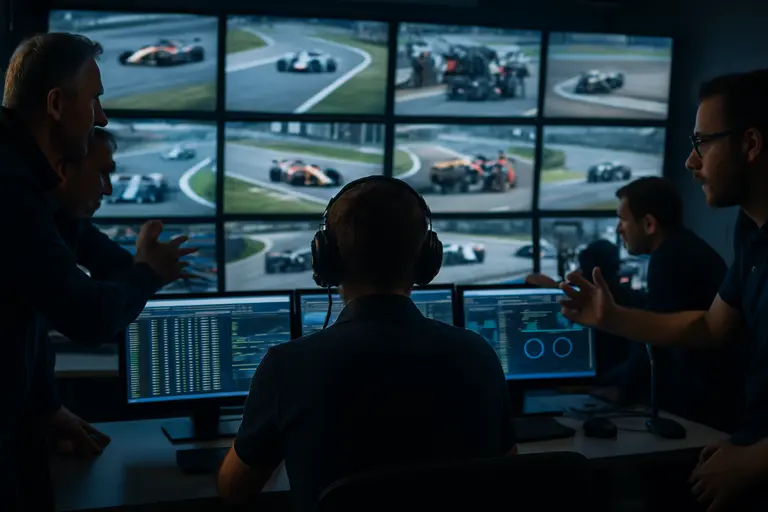
The IR-28’s strategic impact should be measured by how many decisions it moves from pre-race setup sheets into live race execution. Greater hybrid storage, a lighter chassis, wake-focused aero, inertance-based suspension tools, steering-wheel balance controls and improved information displays all point in the same direction: engineers and drivers will have more ways to alter the race from inside a stint.
The competitive split will come from discipline. The fastest teams will not be the ones that simply use every new tool most often. They will be the ones that build clear rules for when to deploy energy, when to protect tire life, when to adjust balance, and when to trust track position over theoretical pace. The IR-28 strategy question is therefore not whether the 2028 car will be more advanced. It is whether teams can convert added technical freedom into repeatable race decisions under pressure.