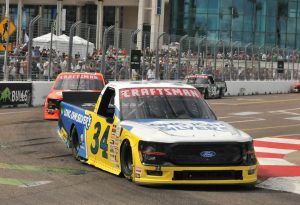
The North Wilkesboro Economy story changed after the Window World 450 was held on July 19, 2026. What had been framed in June as a major return date for NASCAR became, by late August 2026, a completed case study in how a Cup Series points race can load a short-track venue, a county transport network, and a regional hospitality base in a compressed competition window.
The race mattered because it was not another exhibition stop. It marked the first NASCAR Cup Series points-paying race at North Wilkesboro Speedway since September 29, 1996, restoring championship consequence to a 0.625-mile short track that had already re-entered NASCAR’s national conversation through the All-Star Race. For broader schedule context around NASCAR’s 2026 direction, the event fits into the same competitive calendar discussion covered in this NASCAR 2026 season preview.
Race Status And Scheduling Context
Window World 450 Put Cup Points Back On The Line
The Window World 450 was held on July 19, 2026, and its sporting status was central to the economic reaction around it. A points-paying Cup race brings teams, sponsors, broadcast crews, competition officials, support staff, and traveling race operations into the same place with more consequence than a non-points format. Spectrum Local News reported before the event that it would be the first Cup Series points race at North Wilkesboro Speedway since September 29, 1996, and that projections placed direct spending at more than $50 million for Wilkes County Spectrum Local News.
That distinction matters in race-management terms. Teams do not treat points weekends as ceremonial appearances. The event required the operational structure of a full Cup stop: transporters, pit equipment, timing systems, media operations, security plans, and spectator movement across several days. The economic effect came from that entire race week footprint, not only from the laps run on July 19, 2026.
A Sellout Changes The Operating Model
The event was reported as sold out across reserved grandstand seating, camping, and advanced parking, continuing a four-year sellout pattern since NASCAR returned to the track in 2023. From a venue-logistics standpoint, a sellout removes most uncertainty around peak load. It also shifts the risk toward execution: traffic staging, camping access, concessions, restrooms, shuttle flows, and post-race exit patterns have to work at capacity.
For race promoters, that type of demand is valuable because it allows more precise planning of temporary labor, inventory, medical coverage, and trackside services. For competition operations, it also means less margin for disruption. A short track with a compact footprint cannot absorb crowd-management errors as easily as a larger oval with wider surrounding road infrastructure. The business case and the sporting case were therefore linked by the same constraint: capacity.
North Wilkesboro Economy And Event Load
North Wilkesboro Economy In County Terms
For the North Wilkesboro Economy, the key number attached to the July 19, 2026 race was the pre-race estimate of more than $50 million in direct spending for Wilkes County. That figure, as a projection rather than a completed post-event audit, should be read with care. It still frames the size of the opportunity: hotel nights, fuel purchases, food service, event staffing, camping, parking, vendor activity, and race-related logistics all concentrate around the speedway.
The 2023 benchmark gives the 2026 figure some context. The NASCAR All-Star Race at North Wilkesboro generated $42.4 million in statewide economic impact, according to the NC Department of Commerce’s race impact analysis, which also cited state investment of $18 million from American Rescue Plan funds for improvements including safety barriers, lighting, pavement, roofing, electrical systems, and HVAC work NC Department of Commerce. The supplied research also states that the 2023 event supported 625 jobs across North Carolina, with 253 in Wilkes County, and increased statewide labor income by $27.9 million.
Visitor Reach Expanded The Demand Curve
The visitor base was not local-only traffic. The supplied research states that the 2023 All-Star Race week drew more than 40,000 unique visitors to the track, while the 2026 Window World 450 drew attendees from all 50 U.S. states and at least eight foreign countries. That geographic spread is material because long-distance spectators tend to increase lodging demand and multi-day spending compared with a purely regional crowd.
- Race demand reached grandstands, camping, and advanced parking before the event date.
- County spending was projected at more than $50 million before the July 19, 2026 race.
- The 2023 All-Star Race provided a measurable benchmark for jobs, labor income, and statewide impact.
- Infrastructure spending before the return helped support higher-profile NASCAR events at the venue.
The North Wilkesboro Economy did not receive that load evenly. Speedway-adjacent services carried the sharpest peaks, while businesses farther from the track likely saw effects tied to lodging overflow, meal stops, and race-week travel patterns. Without a completed 2026 audit in the supplied material, the exact distribution remains uncertain.
Race Engineering Pressure On A 0.625-Mile Venue

Short-Track Competition Drives Schedule Density
North Wilkesboro Speedway’s 0.625-mile length shapes both racing and event operations. A short track compresses the competitive product: traffic arrives quickly, restarts can be decisive, pit-road timing becomes sensitive, and track position can carry heavy strategic value. Those racing traits support the appeal of the event, but they also compress the off-track workload because the venue must process a major Cup Series operation in a smaller physical setting than many modern NASCAR facilities.
That is where race engineering and local economics intersect. More meaningful competition tends to raise stakeholder commitment: teams bring full race-week programs, media demand rises, and sponsor activation grows around the event. None of that can function if the venue cannot support power, lighting, communications, paddock access, safety systems, and spectator circulation. The spending impact depends on the racing product being credible at Cup level.
Infrastructure Was A Competition Enabler
The reported $18 million state investment was not an abstract civic improvement line. Safety barriers, lighting, pavement, roofing, electrical systems, and HVAC support directly affect the ability to stage a modern NASCAR weekend. Safety systems relate to competition readiness. Lighting affects operations and schedule control. Electrical and HVAC capacity support scoring, media, suites, race control, and medical or administrative functions.
That infrastructure work helped convert North Wilkesboro from a nostalgia-driven venue into a track capable of hosting repeat national events. The sellout pattern after NASCAR’s 2023 return indicates demand, but demand alone is not enough. A race weekend must be run with the reliability expected by teams, officials, broadcasters, and spectators. The economics follow only if the facility can repeatedly deliver that standard.
North Wilkesboro Economy After The Window World 450
What Can Be Measured Now
The North Wilkesboro Economy can be assessed through firm pre-race and benchmark data, but the supplied research does not include a completed official 2026 post-event economic audit. That distinction matters. The more than $50 million figure for Wilkes County was a projection made before the Window World 450, while the 2023 All-Star Race figures were tied to a completed analysis. Any claim that the 2026 event definitively exceeded or missed that projection would go beyond the available material.
What can be stated is narrower and stronger: NASCAR’s return to North Wilkesboro produced repeated sellouts, a Cup points race for the first time since 1996, a projected county spending surge for July 2026, and a 2023 baseline showing substantial statewide impact. Those are enough to show why the speedway now functions as more than a revived short track. It is a competition venue with measurable regional economic weight.
Why The Racing Product Matters To The Economic Case
The long-term value of the North Wilkesboro Economy effect will depend on whether the racing product remains strong enough to justify repeat national scheduling. Short-track racing gives NASCAR a different competitive texture from intermediate ovals and superspeedways, and North Wilkesboro’s compact layout adds a specific operational identity. If the venue continues to stage races that teams, sponsors, and spectators treat as high-value events, the economic case becomes easier to defend.
The July 19, 2026 Window World 450 therefore stands as a completed test rather than a pending promise. Its importance was not only that people came to North Wilkesboro. It was that a points-paying Cup race returned, sold out, and placed a measurable load on a county that had already seen the economic effect of NASCAR’s 2023 comeback. The next useful data point is not speculation; it is a full 2026 post-race audit showing how much of the projected spending was captured locally and how the gains were distributed across Wilkes County.