Honda’s performance reputation has always been stronger than the size of its enthusiast lineup. The Honda Sport Line could change that by moving race-informed tuning beyond a few halo models and into cars ordinary buyers can use every day. The key question is whether Honda can build a genuine performance ladder below the Civic Type R.
That possibility arrives at the right moment. Across the new-car performance landscape, buyers face heavier vehicles, more electrified powertrains, fewer manual transmissions, and increasingly digital driving experiences. Honda now has an opening to prove that engagement can survive those changes without requiring every enthusiast to buy the fastest, most expensive model.
Honda Sport Line Is More Than a New Badge
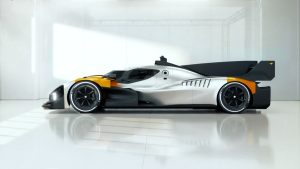
Honda introduced Sport Line at the 2026 Tokyo Auto Salon as a forthcoming family of on-road production models shaped by knowledge gathered through racing. It also said HRC-spec models would reach a wider range of production vehicles, giving Honda Racing Corporation a larger road-car role.
Sport Line appears to describe a broader product direction, while HRC-spec cars and HRC Performance Parts represent the sharper end. Honda’s new performance-line strategy included a Civic Type R HRC Concept, a Prelude HRC Concept, and the Civic e RS rather than one isolated special edition.
The opportunity is a performance middle ground: better steering response, damping, braking, seating, and control calibration without the price or track focus of a full Type R.

The Missing Rung in Honda’s Performance Ladder
Honda already knows how to build an exceptional front-wheel-drive performance car; the Civic Type R lacks no credibility. The problem is that the distance between a normal Honda and the Type R can feel too large as affordable coupes, manual trims, and naturally aspirated enthusiast models disappear.
A serious Sport Line could fill that gap. Honda could offer several levels of involvement: a responsive hybrid RS, a focused Sport Line chassis package, HRC-developed accessories, and a Type R at the top.
The value would come from hardware before horsepower. A car does not need a dramatic output increase to feel better if its body control, brake feel, steering, tires, seats, and powertrain response have been tuned as one system.
What Honda Has Actually Put on the Table
Honda has revealed enough to establish a direction, but not enough to define the final hierarchy. The lineup is best read as signals rather than finished promises.
| Model or Program | Current Status | Enthusiast Relevance | Major Unanswered Question |
|---|---|---|---|
| Civic e RS | On sale in Japan since June 2026 | S+ Shift and RS-specific suspension | Whether it reaches other markets |
| Prelude HRC Concept | Concept with HRC Performance Parts | Could sharpen an accessible hybrid coupe | Which parts reach production |
| Civic Type R HRC Concept | HRC-spec development concept | Pushes the flagship closer to racing | Whether it becomes a model or package |
| Wider HRC parts program | Under development | Creates a possible upgrade path | Pricing, warranty, and dealer availability |
The Civic e RS is especially important because it has already moved beyond the show stand. Honda’s RS-specific chassis package combines S+ Shift with dedicated suspension tuning, showing that Honda will change how a hybrid drives rather than rely on appearance.
Chassis Tuning Will Decide Whether Sport Line Matters
The easiest version of Sport Line would be cosmetic: darker wheels, red stitching, badges, a louder drive mode, and an aggressive bumper. That might sell, but it would not rebuild Honda’s enthusiast pipeline.
The meaningful version would change how the car responds before the driver reaches the speed limit. More disciplined damping, stronger brake-pedal consistency, supportive seats, reduced unsprung mass, sharper steering response, and carefully selected tires can transform an ordinary commute without making the car exhausting.
Electrified Hondas could benefit most. Hybrid powertrains are smooth and efficient, but they can feel detached when acceleration, engine speed, and driver inputs do not behave like a traditional geared car. S+ Shift addresses part of that emotional gap. Sport Line must make the entire car feel coherent, not merely add simulated shifts.
HRC Parts Could Make Ownership More Interesting
Honda’s second opportunity is a factory-supported upgrade path. Enthusiasts have modified Civics, Integras, Preludes, and Accords for decades, often mixing aftermarket parts with uncertain compatibility, noise, ride compromises, or warranty concerns.
HRC Performance Parts could offer a more integrated alternative. The Prelude HRC Concept suggests that aerodynamic, suspension, cooling, braking, and weight-focused upgrades may eventually sit alongside complete Sport Line models.
The challenge is real-world accessibility. Parts that are scarce, dealer-restricted, track-biased, or priced like boutique motorsport equipment will create excitement but little reach. Honda needs upgrades that work on road cars, can be serviced normally, and preserve the daily usability that made its best enthusiast models popular.
The Signals That Will Separate Substance From Theater
The first signal will be mechanical specificity. Honda should explain which Sport Line changes affect dampers, bushings, brakes, steering, cooling, tires, weight, and powertrain response. Vague references to racing DNA will not be enough.
A Civic Type R HRC model would be exciting, but it would not prove Sport Line is expanding enthusiast access. Stronger evidence would be several production cars at different prices, including hybrids with genuine chassis development rather than appearance packages.
The third will be geographic availability. Honda has started with Japan, but the larger impact depends on whether Sport Line models and HRC parts reach North America, Europe, and other markets with clear pricing and dealer support.
Honda Sport Line Has to Earn Its Name
Honda does not need to turn every commuter into a track car. It needs to make more ordinary cars feel deliberately engineered for people who notice steering weight, brake response, body control, and the way a powertrain reacts through a corner.
That is why the Honda Sport Line matters now. It could preserve driving character as Honda moves deeper into hybrids and EVs while creating a path between standard models and Type R. But the badge is the easy part. Success will depend on whether Honda spreads real chassis knowledge, useful HRC hardware, and attainable driver involvement across the range.