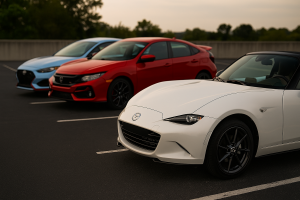
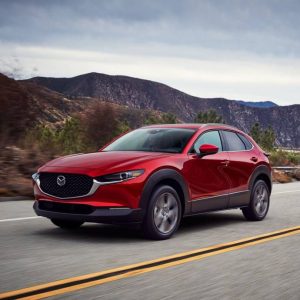
There was a time when walking into a dealership felt like stepping into a candy store. The brochure smelled like fresh ink, the salesman promised “a simple deal,” and the car itself promised freedom, speed, and maybe a little trouble—in the fun way.
Today, a lot of car enthusiasts walk into that same showroom and feel… tired. Not because new cars are objectively “bad.” In many ways they’re the best cars ever built: quicker, safer, more efficient, and packed with technology. But that’s the problem. They can feel less like machines you drive and more like devices you manage.
If you’ve noticed enthusiasts clinging to older cars, hunting for used gems, or saying things like “they don’t make them like they used to,” it’s not just nostalgia talking. There are real, practical reasons new cars are losing their magic for the people who love driving most.
The Price Problem: New Cars Feel Like Luxury Products Now
Let’s start with the biggest romance-killer: cost.
In the U.S., new-vehicle average transaction prices have been hovering near (and recently above) the $50,000 mark. Kelley Blue Book reported the average transaction price surpassed $50,000 in September 2025 and was still about $49,766 in October 2025. (Kelley Blue Book | MediaRoom)
That price shift changes everything. When cars cost this much, they stop feeling like hobbies and start feeling like financial commitments you need to “justify.” The fun gets audited by your bank account.
Payments tell the same story. Experian data reported average new car payments around the mid-$700 range in 2025, with long loan terms becoming normal. (Road & Track)
Enthusiasts don’t necessarily hate spending money on cars. They hate spending money on cars that don’t feel worth it.
Why it stings more for enthusiasts
When prices climb, buyers expect a special experience: great steering feel, a soulful engine, an interior that doesn’t feel like a tablet glued to a dashboard. Instead, many new models feel heavier, more complicated, and more insulated than the cars enthusiasts fell for in the first place.
The “Software Car” Era: Features You Rent, Not Own
A modern car is increasingly a rolling software platform. Over-the-air updates, app-based controls, and digital subscriptions aren’t side dishes anymore—they’re becoming part of the business model.
Industry research from S&P Global notes connected services and software-based features are becoming a growing slice of automakers’ revenue, powered by digital subscriptions and OTA upgrades. (S&P Global)
To enthusiasts, this can feel like the rules changed mid-game. You used to buy a car and then modify it. Now you buy a car and discover some features might be locked behind a paywall, a trim level, or a terms-of-service agreement you didn’t realize you signed.
BMW’s heated seats subscription saga became a symbol of this shift—even though BMW later dropped that specific approach, it showed where the industry’s head was at. (Forbes)
The emotional impact
Cars used to feel like personal property you could keep forever. Subscription features make them feel more like a lease on convenience.
Touchscreens, Tech Fatigue, and the Death of Simple Controls
Car enthusiasts love tech when it makes the car better. But many new cars bury the basics—HVAC controls, seat heaters, drive modes—inside layered menus.
Drivers aren’t imagining the frustration. J.D. Power’s 2025 U.S. Multimedia Quality and Satisfaction Study found multimedia issues remain common, and touchscreen/digital display problems increased year over year. (J.D. Power)
This matters because enthusiasts don’t just “commute.” They drive for pleasure. They notice when a steering wheel button takes three tries or the screen lags like a cheap phone from 2012.
And there’s a safety angle too: anything that pulls your attention from the road is a problem. The IIHS has extensive research on distracted driving, emphasizing how common and risky attention-diverting behaviors can be. (IIHS Crash Testing)
Why it feels worse than it sounds
A laggy touchscreen is annoying in a parked car. It’s infuriating at 70 mph when you’re trying to adjust the fan speed without playing “guess which menu I’m in.”
Bigger, Heavier, and Numb: The Enthusiast’s Nightmare Combo
Many enthusiasts describe new cars with the same words: heavy, isolated, numb.
Some of this is physics. Safety equipment, sound deadening, bigger wheels, larger bodies, and batteries (for hybrids and EVs) add mass. The EPA’s Automotive Trends reporting tracks long-term shifts in vehicle attributes, including vehicle weight and performance trends over decades. (EPA)
The market has also tilted toward SUVs and trucks, because that’s what sells. The result is that “normal” vehicles have grown up, grown out, and put on weight.
Even safety—usually a win—has a complicated side. IIHS research has pointed out that the safety benefits of ever-larger vehicles can top out once weight exceeds the fleet average, while risks to people in other vehicles rise. (IIHS Crash Testing)
The driving feel problem
Weight isn’t automatically bad. Plenty of heavy cars are fun. But modern tuning often prioritizes smoothness over feedback. Steering is lighter, suspensions filter out texture, and powertrains are engineered to feel effortless.
Effortless is nice. Enthusiasts usually want engaging.
Manuals Are Nearly Gone, and Automatics Don’t Always Replace the Joy
If you grew up associating driving fun with rowing your own gears, the modern market is rough. Manuals have become rare enough to feel like special-edition nostalgia items.
The EPA’s 2024 Automotive Trends Report notes manual transmissions have been below 1% of production since model year 2021. (EPA)
Automatics are faster now. Dual-clutches can shift like a caffeinated robot. But for many enthusiasts, speed isn’t the only goal. Interaction is.
What enthusiasts are really mourning
Not “manuals” as a technology—manuals as a feeling of control, rhythm, and involvement.
Cars Feel Less “Yours” Because Repairs and Modding Feel Harder
A huge part of enthusiast culture is tinkering. Learning your car. Fixing it. Upgrading it. New vehicles can feel locked down—digitally and mechanically.
The right-to-repair conversation has gotten louder partly because modern vehicles generate more data and rely on software access. In Massachusetts, a voter-approved right-to-repair/data-access law survived a court challenge in 2025, highlighting the tension between repair access and automakers’ cybersecurity arguments. (Reuters)
Enthusiasts aren’t asking to hack cars unsafely. They’re asking to keep the tradition alive: if you own it, you should be able to service it, understand it, and improve it.
The practical reality
Even if you personally don’t wrench, you still feel it when repair costs rise, independent shops struggle to access tools/data, and simple fixes turn into expensive module replacements.
The EV Transition: Exciting… and Also a Culture Shock
Electric cars can be thrilling. Instant torque is hilarious in the best way. But the shift is also changing what “enthusiast” means.
Some enthusiasts love EVs. Others feel disconnected because the sensory cues they grew up with—engine sound, shifting, mechanical drama—are different or absent.
On top of that, emissions rules and political back-and-forth add uncertainty, especially in Europe, where 2035 rules have been a major point of debate and recent reporting suggests possible softening/adjustments under consideration. (AP News)
Why this affects enthusiasm
It’s hard to fall in love with a future that feels unclear. People don’t just buy cars; they buy into a world around those cars—aftermarket, community, track days, long-term ownership. Uncertainty makes people hesitate.
What Would Make Enthusiasts Fall Back in Love?
Here’s the twist: enthusiasts don’t need every new car to be a loud, rear-wheel-drive coupe with a manual and no screens. They just want some cars to be built with driving joy as the priority, not a side effect.
That means pricing that doesn’t feel like a mortgage, controls that work without a software tutorial, and engineering choices that preserve feel and feedback. It means allowing enthusiasts to own the full experience—without subscriptions for basics, without unnecessary digital friction, and without turning every car into the same tall, heavy shape.
New cars can absolutely be lovable again. They just need to remember what made people fall in love in the first place: the relationship between human, machine, and road.
References
Kelley Blue Book/Cox Automotive: New-vehicle average transaction price surpassing $50,000 (Sept 2025) and October 2025 average transaction price ($49,766). (Kelley Blue Book | MediaRoom)
J.D. Power: 2025 U.S. Multimedia Quality and Satisfaction Study (touchscreen/display problems). (J.D. Power)
EPA: Automotive Trends Report hub; manual transmissions below 1% since MY2021 (as summarized from EPA report coverage). (EPA)