Latest Car Models 2026 is not just a search for what appeared on the launch calendar today; it is a useful reading of where the car market is placing its next bet. The updated 2026 Skoda Kodiaq gives that shift a clear shape, because the biggest story is not a dramatic redesign but a more serious push into safety technology, driver assistance, everyday confidence, and market context.
Why Latest Car Models 2026 Are Becoming A Technology Story
The newest cars are not always interesting because they look radically different. Often, the more revealing update is the one that shows what automakers now believe buyers will no longer treat as optional. That is why the 2026 Skoda Kodiaq deserves attention. It keeps the broader SUV formula intact while adding more electronic assistance where families, commuters, and long-distance drivers feel real pressure and accountability.
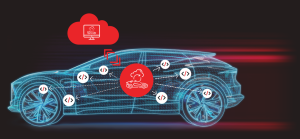
The Kodiaq update adds Advanced Driver Assistance Systems on select trims, including adaptive cruise control, lane assist, blind-spot monitoring, rear traffic alert, exit warning, turn assist, and crossroad assist. On paper, that reads like a technical checklist. In the market, it reads like a shift in value and comfort. Large SUVs are no longer judged only by space, stance, and badge presence. They are judged by how intelligently they support the person behind the wheel.
A useful starting point for readers tracking Latest Car Models 2026 is the Kodiaq update because it shows how a familiar nameplate can become more relevant without changing its basic identity. That kind of update is easy to underestimate, but it often reveals the market’s next priority and timing before a full redesign does.
The 2026 Skoda Kodiaq Update Is Quiet But Important
The 2026 Skoda Kodiaq is not trying to win attention through shock value. Its exterior and mechanical character remain broadly familiar, while the feature strategy moves forward. That matters because buyers in the premium SUV segment are increasingly looking for more than size and comfort. They want a vehicle that feels current, protective, and composed in complicated daily driving. The real story is execution and restraint.
| Model | Status | Key Update |
|---|---|---|
| 2026 Skoda Kodiaq | Unveiled today / updated model | Adds ADAS features, including adaptive cruise control, lane assist, blind-spot monitoring, rear traffic alert, exit warning, turn assist, and crossroad assist on select trims. |
That table may look simple, but its implications are significant. A family SUV is now expected to reduce stress, not merely carry people and luggage. Adaptive cruise control can ease highway fatigue. Blind-spot monitoring can help in dense traffic. Rear traffic alert can matter in tight parking lots. Exit warning can be useful in cities where two-wheelers and pedestrians move unpredictably. These features build trust and awareness when they feel natural.
The key question is not whether a vehicle has driver-assistance technology. The sharper question is whether the technology is tuned well enough to make daily driving calmer. A good system supports the driver without becoming intrusive. A poor system adds warnings without adding clarity or reliability. That distinction will become more important as more SUVs advertise similar features.
ADAS Is Moving From Luxury Feature To Purchase Logic
For a long time, driver-assistance technology felt like a premium extra. It appeared in expensive trims, filled brochures, and helped brands project sophistication. That has changed. As more vehicles add lane support, adaptive cruise, traffic alerts, and blind-spot monitoring, buyers begin to see these systems as part of the car’s basic quality and baseline.
This is where Skoda’s timing makes sense. The Kodiaq competes in a space where safety perception matters as much as cabin space. A buyer considering a three-row SUV is often thinking about family duty, highway stability, and long-term comfort. Better assistance features can directly influence that decision because they affect the driving experience every week, not just on a test drive. That creates momentum and relevance.
There is a caution here. ADAS is not autonomy. These systems do not replace human attention, road awareness, or sound judgment and accountability. Automakers have to explain that clearly, and drivers have to understand the limits. The best technology feels helpful because it works in the background, not because it promises a fantasy of hands-off driving.

Beijing Shows How Fast The Future Is Arriving
The Kodiaq update gives us the practical side of the story. The 2026 Beijing Auto Show gives us the aggressive side. Beijing has become one of the clearest stages for the industry’s next ambitions: electric performance, robotaxis, artificial intelligence, drive-by-wire systems, lidar-heavy safety suites, and cabin concepts built around software. The scale of the experimentation is difficult to ignore. It creates tension and competition for every established automaker.
The current wave of new 2026 car launches includes vehicles and concepts such as the XPeng GX, Geely EVA Cab, Li Auto L9 Livis, IM LS8, Denza Z Convertible, Lynk & Co GT Concept, and BYD Ocean-V. Not all of them will reach every market, and some are clearly designed to make a statement. Still, they reveal an industry moving with unusual speed and scale.
What stands out is the breadth of China’s push. The conversation is no longer only about affordable EVs. It now includes luxury electric performance, autonomous mobility, high-powered computing, lifestyle cabins, and new forms of transport that blur the boundary between car, device, and mobility platform. That breadth is a direct challenge to older ideas of automotive leadership and ambition.
Why Chinese EV Concepts Matter Beyond China
It is tempting to dismiss extreme show cars as fantasy. That would be a mistake. Concept vehicles often exaggerate the future, but they also help define the direction of travel. A robotaxi with no conventional driver controls may not be relevant to every buyer today, yet the systems behind it can influence tomorrow’s production cars. The same is true of steer-by-wire, advanced sensors, fast charging, and software-defined cabins. These ideas create signal and imagination.
Chinese EV brands are pushing the industry’s reference points in more than one direction. They are competing on acceleration, battery technology, cabin experience, autonomous capability, and perceived innovation. A broader look at Chinese EV performance shows why the conversation has moved beyond basic range and price. The new contest is about authority and performance.
That matters even for buyers who never purchase a Chinese-market model. Once one market normalizes advanced interfaces, strong acceleration, lidar assistance, or highly flexible interiors, global expectations shift. Legacy brands may still have deep advantages in engineering heritage, service networks, and brand loyalty, but they cannot rely on history alone. They need adaptation and governance.
Upcoming May Launches Add More Competitive Pressure
The wider May 2026 launch conversation also includes models such as the Nissan Tekton, Skoda Kodiaq RS, Tata Sierra EV, Honda City facelift, and Honda ZR-V. Each one points to a different customer need. Some are about SUV practicality. Some are about electrification. Some are about hybrid relevance. Some are about keeping traditional segments alive in an SUV-dominated market. Together, they show how broad buyer choice and complexity have become.
The Tata Sierra EV is especially interesting because it connects nostalgia with electrification. The Honda ZR-V brings hybrid thinking into the crossover conversation. The Honda City facelift reminds us that sedans still have a role when efficiency, comfort, and urban usability are well balanced. The Kodiaq RS, meanwhile, gives Skoda room to speak to buyers who want a more emotional SUV. Each model carries a different strategy and identity.
This is where the launch calendar becomes more than a list. It becomes a map of competing bets. Automakers are trying to understand whether customers want full EV commitment, hybrid flexibility, familiar combustion options, premium safety systems, performance identity, or practical affordability. The answer is not one thing. The market is fragmenting, and that fragmentation creates opportunity as well as risk. Even regional launches can change the wider conversation because buyers compare across body styles, fuel types, and technology packages more aggressively than they used to. A compact hybrid, a nostalgic EV, and a performance SUV may not compete directly on paper, but they still compete for attention, showroom visits, and consumer confidence.
The SUV Market Is No Longer Just About Size
SUVs won because they gave buyers what sedans often could not: a higher seating position, flexible space, and a stronger sense of road presence. But that formula has matured. A modern SUV cannot survive on height and cargo room alone. It needs software, safety, efficiency, comfort, and long-term ownership logic. That is the new standard and software reality.
The Kodiaq update fits that reality. It strengthens the areas where SUV buyers increasingly ask harder questions. Does the vehicle help on highways? Does it watch blind spots? Does it feel secure in traffic? Does it reduce fatigue? Does it justify its price beyond the badge? Those questions are now central to the purchase journey. They define perceived worth and safety.
This is also why brands must be careful. Technology can elevate an SUV, but only when it feels reliable and easy to understand. Buyers do not want a lecture from their dashboard. They want assistance that feels calm, predictable, and useful. The best systems disappear into the drive, creating resilience rather than distraction.
Buyers Should Look Past The Launch-Day Excitement
Launch days are designed to create excitement. That is part of the business. The danger is that every new model can sound essential before anyone has lived with it. A smart buyer should separate announcement energy from ownership reality. The first question should be trim availability. A vehicle may advertise advanced features, but the real cost depends on where those features sit in the variant structure.
The second question is calibration. Two vehicles can offer similar ADAS names but behave very differently. One adaptive cruise system may feel smooth in traffic, while another may feel nervous. One lane-assist system may gently guide the vehicle, while another may intervene too abruptly. Feature names are marketing. Behavior is evidence.
The third question is after-sales support. Software-heavy vehicles require trained technicians, diagnostic tools, update discipline, and clear owner communication. This is where brand infrastructure matters. A futuristic vehicle is only attractive if the ownership ecosystem can support it. Without that, innovation becomes friction.
A careful buyer should also consider how a vehicle fits into ordinary life after the launch buzz fades. The best car is not always the one with the longest feature list; it is the one that matches commute patterns, family needs, budget limits, service access, and long-term expectations. That requires balance and patience, especially when every brand is trying to make its newest model sound urgent.
Automakers Are Selling Confidence Now
The deeper shift across the newest models is that automakers are selling confidence. That confidence may come from safety systems, battery range, hybrid efficiency, cabin intelligence, performance, resale strength, or brand familiarity. The product is still a car, but the promise is broader. It is about making the buyer feel that the vehicle will remain relevant as the market changes. That is a difficult form of credibility.
For Skoda, the Kodiaq update is about keeping a respected SUV aligned with modern expectations. For Chinese EV brands, Beijing is about projecting technological ambition. For upcoming May launches, the goal is to arrive with a clear reason to exist. In every case, the market rewards brands that turn features into practical benefit.
I do not think the most important vehicles are always the loudest. Sometimes the model to watch is the SUV that quietly adds better driver assistance. Sometimes it is the concept car that shows where software and electrification are heading. Sometimes it is the upcoming launch that forces an entire segment to sharpen its offer. The common thread is change.
What Latest Car Models 2026 Tell Us About The Next Buying Cycle
Latest Car Models 2026 tells us the next buying cycle will reward vehicles that combine familiar strengths with meaningful technology. The 2026 Skoda Kodiaq is a grounded example. It is not chasing spectacle. It is adding assistance features that speak directly to safety, convenience, and daily comfort. That kind of update may not dominate social media, but it can influence real buying decisions.
The Beijing Auto Show tells the other half of the story. The future is arriving through electric hypercars, robotaxi ideas, AI-heavy SUVs, flexible cabin concepts, and high-performance EV platforms. Some ideas will fade. Others will move into production cars and reset expectations quietly. That is how automotive innovation often works.
For readers, the opportunity is better choice. The risk is noise. More technology does not automatically make every car better, and more launches do not automatically make shopping easier. The smarter approach is to ask which features improve daily life, which ones protect long-term value, and which ones simply decorate the brochure. That requires discipline.
That is why Latest Car Models 2026 matters right now. It captures a market moving on several fronts at once: safer SUVs, faster EV development, smarter interiors, tougher competition, and buyers who expect more proof before they commit. The brands that win will not simply make the most noise. They will turn technology into everyday impact.