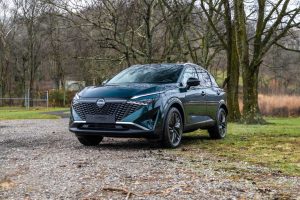
The dream of a flying car has always lived somewhere between engineering ambition and cultural punchline, but the Alef Model A flying car gives that old fantasy a sharper, more urgent edge. It arrives at a moment when electric vehicles, vertical takeoff aircraft, battery innovation, and urban congestion are converging into one of the most consequential transportation debates of the decade.
What makes the Alef Model A flying car so compelling is not simply that it can drive and fly. It is that it tries to look ordinary until the exact moment it becomes extraordinary.
A Future Car Disguised As A Normal One
At first glance, the Alef Model A does not present itself like a traditional aircraft. It does not rely on obvious wings, exposed rotors, or a helicopter-like silhouette. Instead, it appears closer to a compact futuristic car, with its most radical machinery hidden inside the body.
That design choice is not cosmetic. It is the central idea. The Alef Model A flying car is trying to solve a psychological problem as much as a mechanical one. For flying cars to move beyond novelty, people must be able to imagine them in real places: driveways, roads, parking spaces, private properties, and eventually controlled takeoff zones.
The hidden-propeller layout gives the vehicle its signature tension. It looks familiar enough to be understood as a car, yet its internal architecture belongs to the emerging world of electric vertical takeoff and landing mobility. The result is a machine that feels less like a science-fiction prop and more like an early attempt at a new category.
How The Alef Model A Flying Car Works Conceptually
The core promise is simple: drive on roads when roads make sense, then lift vertically when congestion or terrain makes flight more efficient. That is why vertical takeoff matters so much. A conventional flying car that needs a runway is not truly useful in most urban or suburban environments. A vertical takeoff vehicle can, in theory, operate from far more compact spaces.
The Alef Model A flying car uses concealed propulsion inside its body. Rather than attaching flight equipment externally, the vehicle integrates lift systems into the structure itself. That allows it to preserve a car-like form while offering aerial capability.
In practical terms, this creates a hybrid identity:
| Design Element | Why It Matters |
|---|---|
| Road-Drivable Body | Makes the vehicle easier to understand as a personal mobility product |
| Vertical Takeoff | Reduces dependence on runways and expands possible use cases |
| Hidden Propellers | Preserves visual simplicity while enabling lift |
| Electric Powertrain | Aligns with the broader shift toward battery-powered mobility |
| Dual-Mode Operation | Combines ground travel and short-range flight in one platform |
This combination explains why the Alef Model A flying car attracts attention. It is not merely another eVTOL aircraft. It is a roadable electric vehicle attempting to become an aircraft without abandoning the idea of being a car.
Why Hidden Propellers Are A Big Deal
The hidden propeller system is the detail that makes the Alef Model A both fascinating and controversial. Exposed rotors are easier to understand visually, but they are difficult to integrate into a street vehicle. They create safety concerns, packaging challenges, and a strong aircraft-like appearance.
By hiding the propulsion system, Alef creates a cleaner and more surprising design. The vehicle can sit on the road without immediately looking like a miniature aircraft. That has branding value, but it also supports the broader consumer narrative: this is a car that can fly, not merely a flying machine with wheels.
Still, concealed propulsion introduces difficult engineering questions. Airflow must be managed through the body. Heat must be controlled. Debris protection becomes essential. Maintenance access must be practical. Noise must be contained. Safety inspections must be straightforward enough to support real ownership, not just demonstration flights.
The key issue is not whether hidden propellers are visually impressive. They are. The deeper question is whether they can be made reliable, serviceable, quiet, and certifiable at scale.

The Real Innovation Is Integration
The most important feature of the Alef Model A flying car is not one component. It is integration. The vehicle attempts to combine automotive packaging, electric propulsion, vertical lift, consumer appeal, and futuristic branding into one coherent product.
That is harder than it looks. Cars and aircraft are designed around different priorities. A car must handle potholes, collisions, weather, stop-and-go traffic, comfort expectations, and road safety standards. An aircraft must prioritize weight, redundancy, lift, stability, and controlled failure modes.
Every kilogram matters in flight. Every safety structure matters on the road. Batteries must deliver enough power for lift while still supporting usable driving range. The body must protect occupants without becoming too heavy to fly. The propulsion system must be powerful without turning the vehicle into something too loud, too fragile, or too expensive to maintain.
That is why the Alef Model A flying car should be viewed less as a finished transportation revolution and more as an ambitious systems-engineering experiment. Its importance lies in how directly it confronts the contradictions that have historically kept flying cars from becoming real products.
Why This Vehicle Has Captured Public Attention
Flying cars have always had cultural power. They represent a specific version of the future: personal freedom, technological optimism, and escape from the limitations of roads. For generations, they were the symbol of progress that never arrived.
The Alef Model A flying car taps directly into that frustration. It does not merely promise speed. It promises release from congestion. It offers the fantasy of looking at a traffic jam and choosing not to participate.
That emotional proposition is powerful. Modern cities are increasingly defined by mobility friction: longer commutes, expensive infrastructure, limited parking, emissions concerns, and public frustration with congestion. Against that backdrop, a vehicle that can drive and fly feels like a radical answer to a familiar problem.
But emotional appeal is not enough. The public may love the idea of flying cars, yet adoption depends on trust. People must believe the technology is safe, regulated, quiet, practical, and worth the cost.
The Regulatory Challenge Ahead
The regulatory environment may decide the future of the Alef Model A flying car more than the styling or even the propulsion system. A vehicle that drives and flies must satisfy two very different worlds: road transportation and aviation.
That means the vehicle’s success depends on rules governing airworthiness, pilot requirements, low-altitude airspace, takeoff locations, emergency procedures, maintenance schedules, and operational limits. The broader category of advanced air mobility is already forcing regulators to rethink how electric vertical takeoff vehicles fit into the national airspace system.
For a deeper view of the regulatory category surrounding vehicles like the Alef Model A flying car, the key issue is that these machines are not simply cars with a new feature. They belong to a developing aviation ecosystem that includes air taxis, eVTOL aircraft, powered-lift vehicles, vertiports, and new operational models.
That reality matters because public imagination moves faster than regulation. A flying car may appear technically possible before it becomes legally practical. The gap between “it can fly” and “owners can use it freely” is large.
The Safety Questions That Cannot Be Ignored
Any serious discussion of the Alef Model A flying car must address safety without romanticizing the technology. A road car failure is dangerous. An aircraft failure can be catastrophic. A dual-mode vehicle must manage both risk profiles.
The safety questions are direct:
- What happens if a propulsion unit fails during vertical lift?
- How much redundancy is built into the system?
- Can the vehicle land safely in a partial-power scenario?
- How does it perform in wind, rain, heat, or low visibility?
- What training will an owner need before flying it?
- How often must critical systems be inspected?
- Where can it safely take off and land?
These questions do not diminish the vehicle. They define the seriousness of the category. A credible flying car cannot depend on spectacle. It must earn public confidence through predictable behavior, transparent operating limits, and rigorous certification.
The most important safety principle is redundancy. In aviation, failure must be anticipated, not treated as an exception. For the Alef Model A flying car to move from fascination to trust, it must show that its systems can tolerate problems without turning routine operation into unacceptable risk.
Why Urban Mobility Makes This More Than A Novelty
The strongest argument for flying cars is not luxury. It is congestion. Cities around the world are struggling with road networks that cannot easily expand. More lanes often create more traffic. Public transit investment is essential but politically difficult and slow. Ride-hailing added convenience, but it also increased vehicle miles in many dense corridors.
The Alef Model A flying car speaks to a different mobility model: selective aerial movement for situations where roads are inefficient. It is unlikely to replace normal driving. It is more plausible as a premium tool for specific routes, emergency flexibility, remote access, or time-sensitive travel.
That distinction matters. The future of flying cars is probably not millions of vehicles lifting off from every driveway each morning. The more realistic near-term future involves constrained operations, approved zones, specific corridors, trained users, and premium pricing.
In that sense, the Alef Model A is not competing only with cars. It is competing with helicopters, private aviation, luxury mobility services, high-end EVs, and future air-taxi networks.
The Market Opportunity And The Cost Problem
The first wave of flying cars will not be mass-market transportation. The economics are too difficult. Advanced batteries, aerospace-grade components, certification work, specialized maintenance, and limited production volumes all push costs upward.
That does not make the category irrelevant. Many technologies begin at the high end before moving downward. Electric cars followed that pattern. So did many aviation, computing, and consumer electronics innovations.
The Alef Model A flying car may initially appeal to wealthy early adopters, collectors, technology executives, private-property owners, and mobility enthusiasts. The larger opportunity depends on whether the platform can prove technical credibility, attract investment, satisfy regulators, and inspire future versions that are simpler or cheaper to operate.
The first product does not have to be universal to be influential. It has to prove that a roadable flying EV can be more than a viral demonstration.
The Infrastructure Question
Even if the vehicle works, the world around it must adapt. This is one of the most underestimated barriers facing the Alef Model A flying car.
A flying car needs places to take off and land. It needs charging infrastructure. It needs maintenance facilities. It needs airspace coordination. It needs rules for noise, privacy, emergency access, and neighborhood compatibility.
The infrastructure challenge is not only physical. It is social and political. Communities may welcome cleaner mobility, but they may resist low-altitude aircraft operating nearby. Property owners may want convenience, while neighbors may worry about noise or safety. City governments may see opportunity, but also liability.
The vehicle’s success will depend on whether it can fit into civic life without feeling intrusive. That may require strict operating zones, limited flight windows, remote landing areas, or early deployment in less dense environments before urban use becomes common.
The Design Psychology Behind The Alef Model A
The most clever part of the Alef Model A flying car may be its restraint. Many futuristic vehicles fail because they look too futuristic. They create excitement, but they do not create trust.
Alef’s vehicle does something different. It uses a familiar automotive outline to make a radical capability feel slightly less alien. That matters because consumer adoption is emotional before it is technical. People need to understand what a product is before they can decide whether they want it.
A car-like body suggests personal ownership, independence, and familiarity. Vertical flight suggests escape, speed, and technological advancement. The Alef Model A combines those symbols in one package.
This is why the vehicle has such strong media appeal. It photographs like a car, but behaves like a concept from the future. That contrast is the story.
Why The Alef Model A Flying Car Is Not Just About Flying
The Alef Model A flying car is part of a broader shift in transportation thinking. The old automotive model centered on horsepower, styling, comfort, and brand identity. The new model increasingly centers on software, electrification, autonomy, energy management, and multimodal capability.
A flying car pushes that shift further. It asks whether a vehicle should be defined by the surface it travels on. If a machine can drive, fly, communicate with infrastructure, and operate within digital airspace systems, then “car” becomes an incomplete label.
This is why the Alef Model A matters even if it remains rare. It pressures the industry to rethink the boundaries between automotive and aerospace design. It also invites regulators, insurers, urban planners, and consumers to confront a future that no longer fits neatly into old categories.
The Skeptic’s Case
Skepticism is healthy here. Flying cars have disappointed the public many times. The obstacles are real: battery density, cost, certification, weather, noise, public acceptance, liability, training, and infrastructure.
The Alef Model A flying car must overcome all of them. It must do so while proving that its unusual design is not merely dramatic, but practical. The hidden-propeller layout must be more than a visual trick. The vehicle must fly safely, drive reliably, and be maintained realistically.
The skeptic’s strongest argument is that combining a car and aircraft may create compromises too severe for either role. It may not be as good as a normal EV on the road or as efficient as a dedicated eVTOL in the air.
That critique deserves attention. Hybrid categories often struggle before they mature. But they can also expose new markets that dedicated products miss.
The Optimist’s Case
The optimistic view is that the Alef Model A flying car represents an early but necessary step toward personal aerial mobility. It does not need to solve every transportation problem immediately. It needs to prove that a new architecture can function, attract buyers, and move through certification pathways.
From that perspective, its weirdness becomes a strength. Breakthrough categories rarely look normal at first. Early automobiles looked strange beside horses. Early airplanes seemed fragile and impractical. Early EVs were dismissed before battery costs and charging networks improved.
The Alef Model A belongs to that lineage of awkward, ambitious machines. It may not be the final form of the flying car, but it could influence what the final form becomes.
A Strange Machine With Serious Implications
The Alef Model A flying car matters because it turns one of transportation’s oldest fantasies into a serious design and regulatory question. It is strange, ambitious, imperfect, and exactly the kind of vehicle that appears when technology begins to outgrow existing categories.
Its future will depend on more than spectacle. Safety, certification, infrastructure, cost, public trust, and operational discipline will determine whether it becomes a landmark product or a fascinating transitional experiment.
Either way, the Alef Model A flying car deserves attention now. It captures a genuine shift in mobility: the move from cars as road-bound machines to vehicles as flexible platforms for movement across multiple environments. The clear takeaway is that the future car may not simply be electric or autonomous. It may also be capable of lifting off when the road is no longer enough.