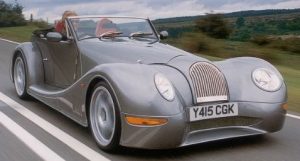
From my perspective, the most fascinating shift in the automotive world right now isn’t just about speed or design it’s about who is building the cars. The emergence of the Dreame supercar represents something far bigger than a single model launch. It signals a fundamental transformation in how supercars are conceived, engineered, and brought to life.
What makes this story so compelling is the source. Dreame is not a traditional automaker. It’s a company rooted in technology known more for high-end consumer electronics than high-performance vehicles. Yet here it is, stepping confidently into a space long dominated by legacy giants like Ferrari and Lamborghini.
To me, that alone says everything about where the industry is heading.
Breaking the Mold: A Tech Company Builds a Hypercar
The idea of a non-automotive company producing a supercar would have seemed unlikely just a decade ago. Today, it feels almost inevitable.
The Dreame supercar is expected to deliver over 1000 horsepower, placing it firmly in hypercar territory. But raw performance is only part of the story. What sets this project apart is its foundation in technology-first thinking.
Unlike traditional manufacturers that evolved from combustion engines, companies like Dreame approach vehicle design with a mindset shaped by software, electronics, and innovation. This leads to a different kind of product one that prioritizes integration, intelligence, and user experience alongside speed.
From what I’m seeing, this shift is redefining what a supercar actually is.
Performance Meets Innovation
At its core, a supercar still needs to deliver breathtaking performance. And by all indications, the Dreame supercar is aiming to do exactly that.
With a target of 1000+ horsepower, it enters a competitive space where acceleration, top speed, and handling are non-negotiable. But what intrigues me is how that performance is being achieved.
Rather than relying solely on traditional engineering methods, the focus is shifting toward advanced electric drivetrains, lightweight materials, and intelligent systems. This combination allows for not only incredible speed but also enhanced efficiency and control.
In many ways, the Dreame project reflects a broader trend: performance is no longer just mechanical it’s increasingly digital and data-driven.
Challenging the Legacy Giants
When you talk about supercars, names like Ferrari and Lamborghini immediately come to mind. These brands have built their reputations over decades, combining heritage with innovation.
So what does it mean for a newcomer like Dreame to enter this space?
From my perspective, it introduces a new kind of competition. Traditional brands excel in craftsmanship, design, and racing pedigree. Tech-driven entrants, on the other hand, bring strengths in software, connectivity, and rapid innovation cycles.
The Dreame supercar isn’t trying to replicate Ferrari or Lamborghini it’s aiming to redefine the benchmark. Instead of competing on history, it’s competing on what the future looks like.
And that’s a powerful position to be in.
The Rise of Non-Traditional Automakers
One of the most important aspects of this story is what it represents on a larger scale. Dreame is not alone. Across the industry, companies from outside traditional automotive backgrounds are entering the high-performance space.
We’re seeing technology firms, electronics manufacturers, and even startups leveraging their expertise to build vehicles that challenge established norms.
This trend is driven by several factors:
- The shift toward electric powertrains
- The increasing role of software in vehicle performance
- The ability to innovate quickly without legacy constraints
The Dreame supercar is a clear example of how these forces are converging.

What This Means for the Future of Supercars
As I look at the bigger picture, it becomes clear that we are witnessing the early stages of a new era in automotive design.
Supercars are no longer defined solely by engine displacement or exhaust note. They are becoming platforms for technology, where performance is enhanced by software, sensors, and connectivity.
According to the International Energy Agency, the rapid growth of electric vehicles is reshaping the entire automotive landscape.
This context helps explain why companies like Dreame are entering the market now. The barriers to entry are changing, and with them, the definition of what’s possible.
The Challenges Ahead
Of course, entering the supercar market is not without its challenges. Building a high-performance vehicle requires more than just advanced technology it demands precision engineering, reliability, and brand trust.
For the Dreame supercar, the road ahead will involve proving that it can deliver on its promises. Competing with established brands means meeting extremely high expectations in terms of quality and performance.
From my perspective, the biggest challenge will be balancing innovation with consistency. It’s one thing to create a groundbreaking concept it’s another to produce a vehicle that performs flawlessly in real-world conditions.
A Defining Moment for the Industry
In the end, the emergence of the Dreame supercar is about more than just a new entrant in the market. It’s about a shift in how we think about cars, performance, and innovation.
This is a moment where the lines between industries are blurring. Technology companies are becoming automakers, and supercars are becoming technological masterpieces.
For me, the most exciting part is what comes next. If Dreame and similar companies succeed, they won’t just compete with Ferrari and Lamborghini they will reshape the entire landscape.
The supercar of the future won’t just be fast. It will be smart, connected, and constantly evolving.
And the Dreame supercar may very well be one of the first true examples of that future.