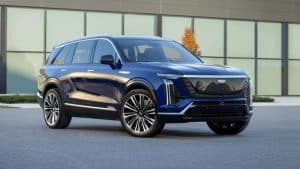
Walk into almost any modern showroom and you’ll meet a new kind of car: fast enough to surprise you, cheap enough to make you suspicious, and so familiar-looking you’ll swear you’ve seen it before… possibly in three other brands’ parking lots.
That’s the strange superpower of many new Chinese mass-market cars. They’re not the rattly “budget specials” people joked about a decade ago. In 2025 alone, Chinese brands were forecast to hit about 10% of the UK new-car market, with similar momentum across parts of Europe. Chinese automakers are also planning huge global growth moves—Leapmotor, for example, has publicly targeted 1 million sales in 2026 and overseas manufacturing expansion with Stellantis.
So yes, the cars are arriving. In volume. In a hurry. The only problem is that many of them are arriving with the personality of a microwave.
Let’s talk about why.
The Big Shift: China Isn’t “Catching Up” Anymore
For years, the story was simple: Chinese cars were cheap, questionable, and mainly domestic. That story has expired.
A Reuters deep dive on China’s new auto giants points to a blunt advantage: Chinese brands have slashed vehicle development time, sometimes to around 18 months for new or heavily revised models, compared with much longer cycles typical for legacy manufacturers. In a world where software updates happen every week and styling trends change every season, that speed is a weapon.
It also helps explain why so many models feel like variations of the same idea. If your product cycle is “build it now, refresh it tomorrow,” you don’t have as much time to obsess over what makes a car you. You have time to make it work.
Why They Feel “Copy-Paste”
This is where enthusiasts start squinting at headlights and saying things like, “Hang on… isn’t that the face from a [insert expensive brand]?” They’re not imagining it.
A 2025 report described backlash and debate around Chinese EV makers producing luxury lookalikes, with design experts arguing that “copying” has become common as brands aim for overseas markets. The argument from the industry side is usually practical: familiarity sells. If buyers already like the “premium SUV stance,” why reinvent the stance? The counterargument is also practical: if everything looks like a “greatest hits” compilation, nothing becomes iconic.
And “iconic” matters. People don’t put posters of “competent crossover #7” on their bedroom wall. They put posters of cars that made someone in a design studio take a risk.
The “Designed by Committee” Effect
Many mass-market Chinese cars are built to win on spec sheets. You get lots of screens, lots of driver assists, lots of features that used to be expensive. That’s not an insult—it’s an achievement. But the same logic that produces generous equipment can also produce conservative design: don’t offend anyone, don’t alienate anyone, don’t get too weird.
The result is a showroom full of vehicles that are objectively good and emotionally… silent.
Fast and Cheap: The Real Reasons They’re Winning
It’s tempting to reduce this to “they’re cheaper,” but the “why” is the real story.
Chinese automakers benefit from cost structures and supply chain advantages (especially batteries), and they’re pushing hard into export markets. The Guardian’s reporting on Chinese brands’ UK growth highlights how brands like MG, BYD, and Chery are gaining share, and it connects that rise to structural advantages like battery supply chains and lower costs.
Meanwhile, Europe has been wrestling with Chinese EV competitiveness using tariffs and negotiations. Reuters notes the EU imposed tariffs in 2024 and talks have continued around price mechanisms and trade concerns. Regardless of where you stand politically, the market outcome is simple: Chinese brands are now part of the mainstream conversation in many regions, and they’re not leaving.
“Forgettable” Isn’t the Same as “Bad”
Here’s the bit that’s hard for internet debates: a car can be good and forgettable at the same time.
Carwow’s coverage captures this vibe well: Chinese cars can be impressive value, but some still have rough edges—like infotainment that frustrates, or tech features that feel half-baked—even when the overall package is strong. That’s a very modern problem: the hardware is great, the price is sharp, and the software sometimes behaves like it needs a nap.
Even when the car is genuinely solid, the brand identity can feel… generic. The steering is fine. The ride is comfortable. The interior is modern. And then you step out and struggle to remember what it looked like. That’s not a reliability issue. It’s a charisma issue.
The Familiar Face Strategy
If you’re trying to sell cars fast in a new market, a familiar look reduces risk. People trust shapes they already understand. A Range Rover-ish outline suggests luxury. A Tesla-ish minimal interior suggests modern tech. A “Euro hatchback” silhouette suggests normality.
You can see this echoed in commentary from European outlets; even when acknowledging Chinese progress, some argue Chinese cars still lag European rivals in “engineering feel” and polish—things that create brand character over time.
The Hidden Cost of Copy-Paste: No One Falls in Love
Enthusiasts don’t just buy transport. They buy stories.
A Golf GTI is a story. A Civic Type R is a story. A Miata is a story with the roof cut off. Many mass-market Chinese cars, right now, are trying to be the sensible answer, not the dramatic question.
That strategy is working commercially. But it can backfire culturally.
When your lineup is packed with “pretty good” crossovers that resemble other “pretty good” crossovers, you risk becoming the brand people choose with their calculator, not their heart. And that’s fine—until a rival undercuts you by $20 a month and you’ve got nothing else to hold onto.
The Rest of World piece on luxury lookalikes frames this as a kind of race-to-the-bottom danger for design differentiation, especially when knockoffs become hard to distinguish from originals. Whether you agree with that take or not, the pressure is real: if everyone can build “premium vibes” cheaply, premium brands have to fight harder to justify the premium.
The Plot Twist: They’re Going to Get Less Generic
If you want the enthusiast take, here it is: this “copy-paste” era is probably a phase.
As Chinese brands become established, they’ll need identity, not just volume. You can already see early signs: some companies are pushing into premium segments, expanding globally, and building local production footprints that force longer-term brand thinking. Reuters reported Leapmotor planning a premium lineup and Spain manufacturing plans tied to overseas growth.
This is what usually happens in the car world. First you copy what works. Then you refine it. Then—if you’re smart—you stop copying and start leading.
What Should the Average Car Enthusiast Do With This Information?
If you’re shopping, treat these cars like you’d treat any new brand entering your life: with curiosity and a long test drive.
Pay attention to the things that don’t show up on a spec sheet. How does the steering feel at 70 mph? Does the lane assist behave smoothly or like a caffeinated squirrel? Is the infotainment simple, or does it bury basic controls in menus? Reviewers have noted that some Chinese models impress overall while still having quirks in tech and usability.
And if you’re watching the industry, don’t underestimate what’s happening. The growth numbers and expansion plans aren’t theoretical—they’re already reshaping markets.
The Bottom Line
“Fast, cheap, forgettable” isn’t a permanent identity. It’s a snapshot of a market moving at full sprint.
Chinese mass-market cars are getting popular because they deliver a lot of car for the money, and because Chinese automakers have become frighteningly fast at building, updating, and exporting vehicles. The “copy-paste” feel is real in parts of the market—especially where design echoes premium brands—but that same speed and scale can eventually produce originality too.
For now, if you want a smart deal, the new wave is worth your attention. If you want a car with soul, you may have to hunt harder—at least until the copy-paste era ends and the personality era begins.