In the world of cars, few things are more dangerous than messing with a cult classic. It’s like trying to change the recipe for a grandmother’s secret sauce—you might think you’re “modernizing” it, but you’re mostly just asking for a lecture.
The Subaru Outback has been the unofficial uniform of National Park rangers, mountain bikers, and people who own at least three different types of kayaks since 1995. But for 2026 (arriving in late 2025), Subaru has done the unthinkable: they’ve taken the world’s favorite “lifted wagon” and turned it into a boxy, upright SUV.
The 7th-generation redesign has officially split the “Subie-verse” in two. Is it a bold step forward or the day the wagon died? Let’s dive in.
The Identity Crisis: Wagon vs. SUV
For three decades, the Outback’s superpower was that it wasn’t an SUV. It was a wagon that went to the gym. It had a low roofline that made loading bikes a breeze and a sleek profile that stood out in a sea of boxy crossovers.
With the 7th-gen redesign, Subaru has leaned heavily into the “rugged SUV” aesthetic. The hood line is higher, the front fascia is more blunt, and the roofline is flatter. If you squint, it looks less like a long-roof Legacy and more like a larger, more muscular version of the Subaru Forester.
Why the Boxy Look is Winning New Fans
While the “purists” are mourning the wagon silhouette, a new wave of buyers is cheering. The boxier shape isn’t just for show; it’s a masterclass in utility. The taller profile has added crucial inches of headroom and pushed the cargo capacity from 32.6 cubic feet up to 35 cubic feet.
For the “average” enthusiast who actually uses their car to haul camping gear, the trade-off is simple: the car looks “tougher,” and you can fit more stuff inside. The new roof rails are also beefier, now supporting a staggering 800-pound static load, meaning your rooftop tent setup just got a major upgrade.
The “Cladding” Controversy
If you thought the previous generation had a lot of plastic cladding, buckle up. The 7th-gen Outback features even more aggressive, textured wheel arches and lower body protection. Subaru claims this is for “scratch resistance” during off-road excursions, but critics argue it makes the car look like it’s wearing a suit of tactical armor for a trip to the suburban mall.
Inside the Cabin: A Victory for Common Sense
If the exterior design is a civil war, the interior is a peace treaty. Subaru clearly listened to the loudest complaint of the 6th-gen era: the lack of buttons.
The Return of Physical Controls
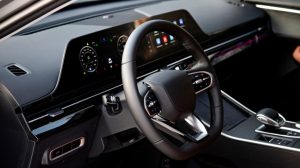
The 7th-gen features a massive 12.1-inch vertical touchscreen, but—and this is a big “but”—Subaru has brought back physical knobs and buttons for the climate controls. No more diving through three digital menus just to turn up the heat when your hands are freezing. It’s a win for ergonomics and safety, proving that sometimes, the “old way” is the best way.
Tech That Doesn’t Feel Like “Tech”
The dashboard has been completely reimagined with a 12.3-inch digital gauge cluster that can show full navigation maps or a “Calm Mode” for night driving. The seats have also been redesigned to be “low-fatigue,” mounted directly to the chassis to reduce the “jiggle” you feel on gravel roads. It’s a more premium, quieter space that finally feels like it justifies its $35,000–$50,000 price range.
Performance: If It Ain’t Broke, Don’t Fix It
Underneath the new boxy skin, the Outback remains comfortingly familiar. The legendary Symmetrical All-Wheel Drive is still standard, as are the two workhorse engines.
-
The 2.5L Boxer: Produces 180 horsepower. It’s not going to win any races, but it’s efficient and reliable.
-
The 2.4L Turbo (XT/Wilderness): Pumping out 260 horsepower, this is the one you want if you actually plan on passing people on a mountain pass. It hits 0-60 mph in about 5.8 seconds, which is shockingly quick for a “family car.”
The biggest mechanical change is a new electronic damping system and a steering rack borrowed from the Subaru WRX. This makes the 7th-gen feel significantly sharper and less “boaty” in the corners, despite its taller stance.
The Verdict: Evolution is Messy
The 7th-gen Subaru Outback is a sign of the times. Subaru knows that to survive, they have to compete with the Toyota RAV4 and Honda CR-V on their own turf—the SUV market.
By making the Outback boxier and more “truck-like,” they’ve arguably lost a bit of that quirky “lifted wagon” soul. However, they’ve gained more space, better tech, and a level of refinement that the previous generation couldn’t touch. It’s still the most capable vehicle in its class, even if it’s now more of a “Short SUV” than a “Tall Wagon.”