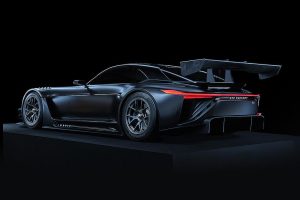
For over a century, car enthusiasts have debated the merits of manual vs. automatic transmissions. But modern performance gearboxes—like Porsche’s PDK, Volkswagen’s DSG, and the robust Tremec lineup—have transformed the conversation entirely. These advanced transmissions shift so quickly and precisely that they’ve redefined what performance driving feels like.
Whether you’re tracking a sports car, launching a supercar, or daily-driving a hot hatch, the technology inside these gearboxes is a marvel of mechanical engineering. But what exactly makes some transmissions capable of shifting in mere milliseconds, faster than any human could manipulate a clutch pedal?
Let’s break down how PDK, DSG, and Tremec transmissions achieve superhuman speed, and why they’re considered the gold standard across performance vehicles.
The Evolution of Performance Gearboxes
Before diving into specific transmissions, it’s important to understand the evolution of shifting technology.
From Manual to Automated Performance
Early manual transmissions relied entirely on driver skill. As engines got more powerful, manufacturers needed transmissions that could:
-
Handle higher torque
-
Shift consistently at high RPM
-
Improve acceleration
-
Reduce lap times
This demand led to the development of:
-
Dual-clutch transmissions (DCTs) like PDK and DSG
-
High-performance automated manuals
-
Strengthened manual gearboxes like Tremec’s TR-series
By the mid-2000s, dual-clutch gearboxes became the preferred technology in sports cars due to their speed and precision.
What Makes Modern Gearboxes So Fast?
To understand why gearboxes like PDK and DSG shift so quickly, we need to look at the key innovations behind them.
1. Pre-selected Gears
Dual-clutch transmissions use two clutches:
-
One clutch controls odd gears (1, 3, 5, 7)
-
The other controls even gears (2, 4, 6)
While you’re accelerating in one gear, the next gear is already pre-selected.
When the shift happens, the system simply swaps which clutch is engaged.
Result:
A shift can happen in 0.1 seconds or less, with no power interruption.
2. Computer-controlled precision
Modern transmissions rely on advanced electronics:
-
Sensors monitoring engine speed, torque, throttle, and traction
-
Algorithms predicting driver behavior
-
Instantaneous clutch modulation
Electronics respond faster than any human could—often within a few milliseconds.
3. Hydraulic pressure systems
High-performance gearboxes use hydraulic actuators that move:
-
Forks
-
Clutch packs
-
Shift sleeves
These actuators operate at immense speed and pressure, far exceeding the capabilities of mechanical linkages.
4. Lightweight internal components
To shift quickly, everything inside the transmission must be light:
-
Hollow shafts
-
Small clutch packs
-
Lightweight synchros (or no synchros at all in DCTs)
Lower rotational mass = faster gear engagement.
Inside Porsche PDK: The Benchmark Dual-Clutch Transmission |
Why PDK Is So Special
Porsche’s PDK (Porsche Doppelkupplungsgetriebe) is widely considered the best performance transmission in the world.
1. Lightning-fast shifts
PDK can shift in as little as:
40–60 milliseconds
That’s faster than:
-
A human shifting a manual
-
Most automatic transmissions
-
Many racing sequential gearboxes
2. Seamless power delivery
Because the next gear is preloaded, you get:
-
No power interruption
-
No torque loss during upshifts
-
No “rubber-band” feeling like older automatics
3. Track dominance
PDK thrives under extreme conditions:
-
Rapid-fire downshifts under braking
-
Rev-matching with surgical precision
-
Heat management for repeated laps
This is why nearly all Porsche GT models (GT3, GT2 RS) are offered with PDK.
PDK’s Secret Weapon: Wet Clutch Packs
PDK uses wet clutches, lubricated with fluid to reduce overheating.
Benefits include:
-
Higher torque capacity
-
Smoother low-speed behavior
-
Greater durability during track use
This is one reason PDK is praised for combining luxury refinement with race-car performance.
Inside Volkswagen DSG: The DCT That Changed the Industry |
Why DSG Is Still a Fan Favorite
Volkswagen’s DSG (Direct-Shift Gearbox) brought dual-clutch performance to the masses.
1. Fast, predictable shifts
DSG shifts in around:
8–15 milliseconds (depending on model)
That’s faster than most automatics even today.
2. Sporty feel for everyday drivers
DSG offers:
-
Crisp paddle shifts
-
Quick downshifts for overtaking
-
Fuel efficiency similar to a manual
This made DSG one of the most influential transmissions in modern automotive culture.
Wet vs. Dry DSG Systems
DSG comes in two main variants:
Wet DSG (DQ250, DQ500)
-
Handles more torque
-
Better cooling
-
Used in performance cars (GTI, Golf R)
Dry DSG (DQ200)
-
More fuel-efficient
-
Lower torque rating
-
Found in smaller cars
Inside Tremec: The Manual Gearboxes That Can Take a Beating |
What Makes Tremec So Special?
While DCTs dominate modern performance cars, manual enthusiasts still point to Tremec as the gold standard.
1. High torque capacity
Tremec transmissions like the TR-6060 or T56 Magnum can handle:
Up to 600–700 lb-ft of torque
Perfect for:
-
Muscle cars
-
Track builds
-
High-horsepower applications
2. Short, crisp throw
Tremecs are known for:
-
Precise shift gates
-
Strong synchros
-
Excellent durability under abuse
3. Used in iconic performance cars
Tremec gearboxes appear in:
-
Dodge Hellcat
-
Ford Mustang GT350
-
Chevy Camaro ZL1
-
Dodge Viper
-
Corvette Z06 (older models)
They’ve earned a reputation for reliability and performance few manual transmissions can match.
Why Tremec Can Shift So Quickly (When Driven Well)
Although Tremec manuals don’t shift as fast as DCTs, they can still deliver rapid gear changes thanks to:
-
Carbon-lined synchros
-
Strong shift forks
-
Optimized gear ratios
-
Low internal drag
A skilled driver can shift a Tremec in 150–200 milliseconds, but the physical limit of human reaction still prevents matching DCT speeds.
PDK vs. DSG vs. Tremec: Which Is Faster?
Here’s a quick breakdown of shift times:
| Transmission | Type | Approx. Shift Time |
|---|---|---|
| Porsche PDK | Dual-Clutch | 40–60 ms |
| VW DSG | Dual-Clutch | 8–15 ms (actuation), ~100 ms overall |
| Tremec Manual | Manual | 150–300 ms (driver dependent) |
Why Automakers Are Moving Toward DCTs and Automatics
1. Faster acceleration
With no interruption in power:
DCT-equipped cars almost always outperform manuals in 0–60 times.
2. Better emissions and fuel economy
Automatics and DCTs are easier to optimize for efficiency.
3. Broader consumer appeal
Most drivers prefer:
-
Easy operation
-
Smooth driving in traffic
-
Paddle-shift convenience
4. Electronics integration
Modern safety and driver-assist systems work better with electronically controlled transmissions.
The Future of High-Performance Gearboxes
While manual transmissions are declining, Tremec remains committed to supplying manuals for performance cars.
DCTs like PDK and DSG will continue to evolve, and automakers are exploring:
-
Hybrid-compatible DCTs
-
Multi-clutch systems
-
AI-driven shift logic
Meanwhile, EVs eliminate gearboxes entirely—but that’s a different story.
Final Thoughts: Why Millisecond Shifting Matters
Modern gearboxes like PDK, DSG, and Tremec represent decades of evolution in mechanical engineering. Their ability to shift in milliseconds enhances:
-
Performance
-
Consistency
-
Driver confidence
-
Vehicle longevity
Whether you’re a purist who loves Tremec’s mechanical feedback or a track enthusiast who demands PDK precision, these transmissions show how far automotive technology has come.
In the world of high-performance driving, milliseconds matter—and these gearboxes are designed to make every shift count.